
Heat Exhaustion vs. Heat Stroke: Symptoms, First Aid & When to Visit the ER
Bellaire ER is a freestanding emergency room at 5302 Bellaire Blvd, open 24/7/365. Walk in or call ((713) 660-0001) anytime.
- Open now, 24/7/365
- Walk in, no appointment needed
- 5302 Bellaire Blvd, free parking
Recognizing Heat Exhaustion Symptoms in Houston’s Heat and Humidity
High Gulf Coast humidity slows the evaporation of sweat from the skin, making heat exhaustion common during outdoor work, youth sports, running, and summer or fall events across Bellaire and Houston. Heat exhaustion occurs when the body loses substantial water and electrolytes (sodium, potassium, chloride) through heavy sweating (dehydration and IV rehydration), reducing circulating blood volume.
At Bellaire ER, our 24/7 emergency room in Bellaire, TX, board-certified emergency physicians evaluate and treat heat exhaustion and severe electrolyte depletion around the clock at 5302 Bellaire Blvd with rapid point-of-care electrolyte panels and intravenous rehydration.
Heat Exhaustion vs. Heat Stroke: The Critical Difference
Telling heat exhaustion apart from heat stroke (ICD-10 T67.0XXA) determines whether you can start cooling measures on the way to the ER or need to call 911 immediately (PMID: 12075060):
Heat Exhaustion Symptoms
- Heavy sweating with cool, pale, moist, or clammy skin
- Dizziness, lightheadedness, or feeling faint when standing up (
orthostasis) - Nausea or vomiting that makes it hard to drink fluids
- Throbbing headache and overwhelming weakness or fatigue
- Painful muscle spasms (
heat cramps) in the calves, thighs, abdomen, or shoulders - Fast, weak pulse and dark-colored urine
- Normal mental status: The person knows who and where they are
Heat Stroke Red Flags (Call 911 Immediately)
- Brain and nervous system changes: Confusion, disorientation, slurred speech, irritability, staggering gait, fainting (
syncope), or seizures - Core body temperature at or above
104°F (40.0°C) - Skin changes: Flushed, hot skin (sweating may still be present in exertional heat stroke in athletes, or absent in classic heat stroke in older adults)
- Rapid breathing and racing heart rate
How to Treat Mild Heat Exhaustion First Aid (And When Home Care Is Not Enough)
If someone shows early heat exhaustion symptoms and is completely alert and able to swallow without vomiting:
- Move immediately into air conditioning or deep shade.
- Loosen or remove excess clothing and equipment (helmets, pads, work gear).
- Cool the skin actively: Apply cool, wet towels to the neck, armpits, and groin, or mist the skin with cool water while fanning.
- Sip cool water or an electrolyte solution slowly. Avoid alcohol and high-caffeine drinks.
Come to the emergency room right away if:
- Symptoms do not clearly improve within 30 minutes of cooling and rest
- Nausea or vomiting prevents keeping oral fluids down
- Muscle cramps are severe or accompanied by dark brownish urine (a sign of muscle breakdown, or
rhabdomyolysis) - The person has a racing heart rate, chest discomfort, or fainting
- The patient is a child, an older adult over 65, pregnant, or takes blood pressure medications (
diuretics,beta-blockers)
How Bellaire ER Treats Heat Exhaustion and Dehydration 24/7
When oral fluids are not enough, walking into Bellaire ER at 5302 Bellaire Blvd, Bellaire, TX 77401 gets you into a cool, private examination suite right away:
- STAT Electrolyte, Kidney, and Muscle Lab Panel: Our on-site laboratory checks serum sodium (ruling out dangerous exercise-associated
hyponatremiaor hypernatremia), potassium, creatinine (acute kidney injury), creatine kinase (CKfor rhabdomyolysis), and serum lactate. - Balanced Intravenous (
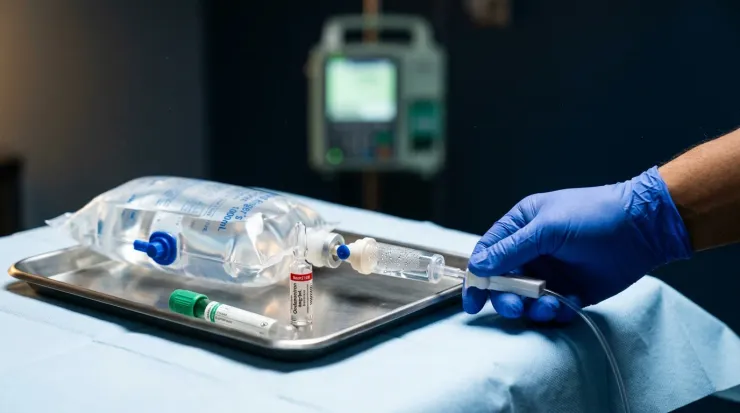
IV) Fluid Resuscitation: Our team administers cooled or room-temperature balanced crystalloid IV fluids (such as Lactated Ringer’s solution, supported by the SALT-ED trial, PMID: 29485926) alongside intravenous anti-nausea medication (ondansetron) so your stomach settles while your circulation recovers. - Cardiac Monitoring and Hospital Coordination: We monitor your heart rhythm and vital signs until your electrolytes and hydration normalize, and coordinate direct hospital admission if severe heat illness or kidney stress requires inpatient monitoring.
For more on recognizing fluid loss in children and adults, read our clinical guide on dehydration warning signs and emergency IV therapy. Walk in 24/7 at 5302 Bellaire Blvd, Bellaire, TX 77401, get directions here, or call (713) 660-0001.
Frequently asked questions
What are the main heat exhaustion symptoms to watch for?
Heat exhaustion symptoms include heavy sweating, cold or clammy pale skin, dizziness or lightheadedness when standing, headache, nausea or vomiting, painful muscle cramps, fast weak pulse, dark urine, and extreme fatigue after heat exposure or exercise.
How do you tell heat exhaustion apart from heat stroke?
In heat exhaustion, the person is alert and oriented (though dizzy or tired) and core body temperature stays below 104°F (40°C). Heat stroke is a life-threatening emergency defined by central nervous system dysfunction (confusion, slurred speech, agitation, fainting, or seizures) paired with severe hyperthermia at or above 104°F (40°C). Call 911 immediately for suspected heat stroke.
When should someone with heat exhaustion go to the emergency room?
Go to a 24/7 emergency room if heat exhaustion symptoms do not improve within 30 minutes of moving into air conditioning and sipping fluids, if nausea or vomiting prevents keeping water down, if the person feels faint or has a racing heart rate, or if the patient is a young child, older adult, pregnant, or has heart or kidney disease.
Clinical references & peer-reviewed sources
Have Questions About Visiting Bellaire ER?
Call our team at (713) 660-0001 any time with questions about visiting our independent, physician-owned freestanding emergency room at 5302 Bellaire Blvd, open 24/7 with short waits.