
Pediatric Care
Call 911 immediately for a child who is struggling to breathe, is having a seizure, or is limp and hard to wake. Seek prompt emergency evaluation for any fever of 100.4°F (38°C) or higher in a baby under 3 months or signs of dehydration. Bellaire ER, at 5302 Bellaire Blvd near you, is open 24/7 with board-certified emergency physicians and on-site lab and imaging to diagnose and treat most childhood emergencies in a single visit.
- Open now, 24/7/365
- Walk in, no appointment
- 5302 Bellaire Blvd, free parking
Unsure if Your Symptoms Require Emergency Care?
Call our clinical triage desk at (713) 660-0001. An on-duty board-certified emergency physician will evaluate your symptoms before you leave home.
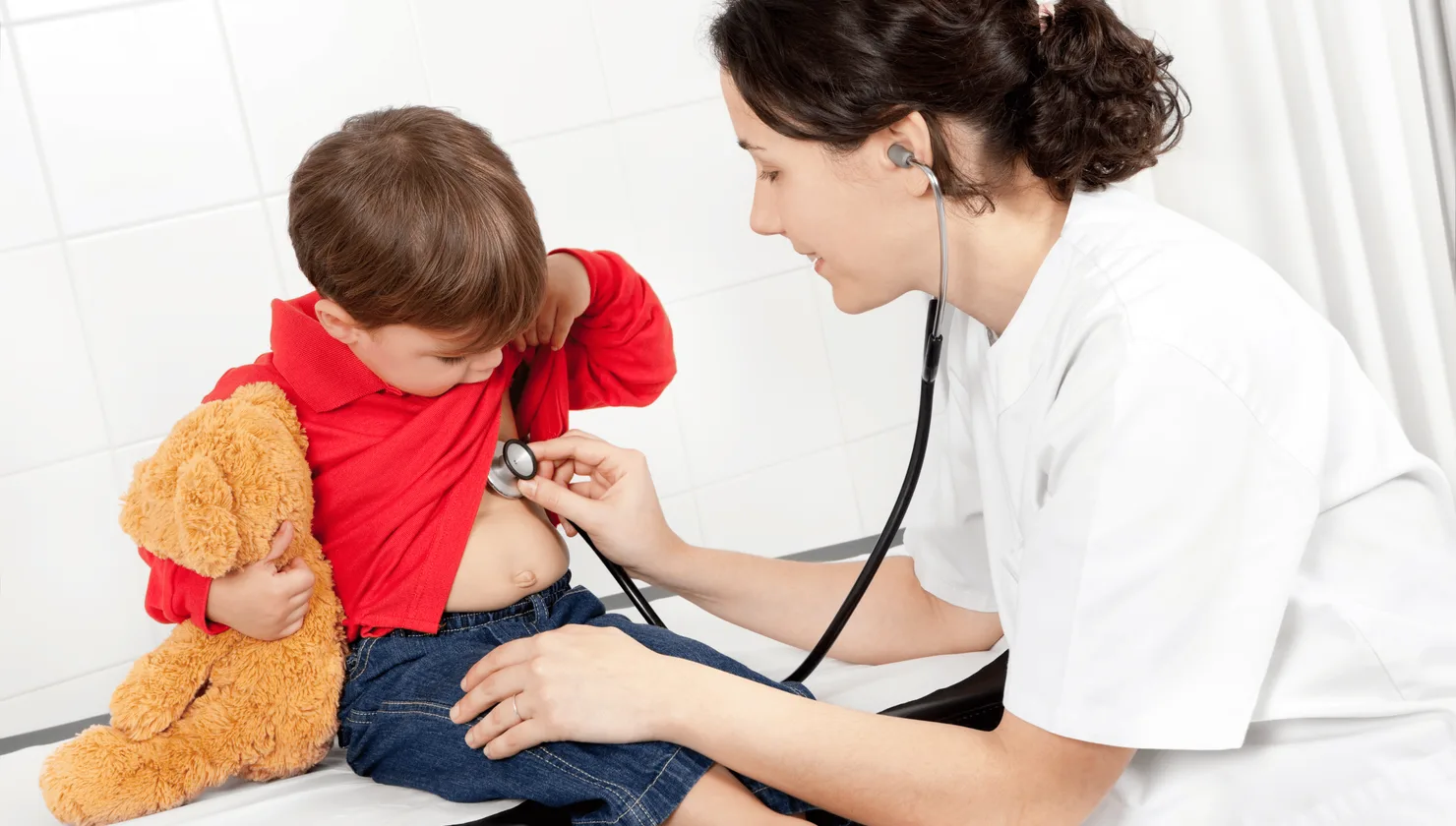
Symptoms
- Fever in a young infant: Any temperature of 100.4°F (38°C) or higher in a baby under 3 months old needs same-day emergency evaluation.
- Trouble breathing: Fast or labored breathing, grunting, flaring nostrils, ribs pulling in with each breath, or bluish lips are urgent.
- Dehydration: Dry mouth, no tears when crying, sunken eyes, unusual sleepiness, and far fewer wet diapers than normal signal fluid loss.
- Persistent vomiting or diarrhea: Ongoing fluid loss that keeps a child from drinking can quickly cause dehydration, especially in young children.
- Non-fading rash: Purple or red spots that do not blanch (fade) when pressed, especially with fever, can signal a serious infection.
- Behavioral changes: Extreme drowsiness, a child who is hard to wake, or inconsolable crying that will not settle should be evaluated promptly.
When it's an emergency
Emergency care for pediatric care
Call 911 immediately for life-threatening symptoms or if you cannot travel safely. Do not drive yourself or delay for online booking.
For other urgent symptoms, seek prompt emergency evaluation. Bellaire ER accepts walk-ins 24/7. For facility questions, call (713) 660-0001.
Call 911 immediately if your child cannot breathe or is struggling to breathe, has blue or gray lips or skin, is having a seizure, loses consciousness, is unresponsive, or cannot be awakened. If you are unsure what is wrong but believe your child is in danger, call 911 and follow the dispatcher’s instructions. For other urgent concerns, including a stiff neck with fever and a rash that does not fade when pressed, seek emergency evaluation right away.
Fever red flags are age-specific. Any fever of 100.4°F (38°C) or higher in a baby younger than 3 months is a medical emergency and needs evaluation the same day, even if the baby otherwise looks well. In older infants and children, seek care for fever that is very high, lasts more than a few days, or comes with dehydration, a severe headache, a stiff neck, a non-blanching rash, or a child who seems very ill.
Dehydration can become dangerous quickly in young children. Go to the ER for a dry mouth, no tears when crying, sunken eyes, marked drowsiness, no wet diaper in 8 hours or more, or vomiting that prevents a child from keeping any fluids down.
Also seek emergency care for a serious head injury with vomiting or confusion, a suspected broken bone, a deep or heavily bleeding wound, a severe allergic reaction with swelling or breathing trouble, or if you believe your child swallowed something harmful. For a known or suspected poisoning, call Poison Control at 1-800-222-1222.
Bellaire ER evaluates and stabilizes pediatric emergencies on-site 24/7 and arranges hospital admission or transfer when a child needs inpatient care.
When it's not an emergency
Many common childhood illnesses can be handled at home, through Bellaire ER's virtual urgent care, or with your pediatrician. A child older than 3 months with a mild fever who is still drinking, urinating, alert, and comforted by fever reducers is usually not an emergency.
Telemedicine or a pediatrician visit is reasonable for typical cold symptoms, a mild cough, a low-grade fever, ear pain, mild sore throat, a minor rash without other symptoms, or mild diarrhea when your child is still taking fluids well.
When you are unsure, it is always safe to call your pediatrician or use telemedicine first for guidance. Trust your instincts, though: if a child looks very ill, is getting worse, or you are worried something is seriously wrong, choose the ER.
What else could be causing this
- Fever without an obvious source
- The single most common reason children come to an emergency room. What it means depends almost entirely on age: in a baby under three months a temperature of 100.4°F or higher is an emergency in its own right because their immune system cannot localize infection, while in a well-looking toddler the same reading is usually a self-limiting virus. How a child looks and behaves matters more than the number.
- Respiratory illness
- Bronchiolitis, croup, asthma, pneumonia and ordinary colds. Children have narrow airways that swell easily, so the same amount of inflammation that gives an adult a cough can obstruct a toddler. The signs are mechanical: fast breathing, skin pulling in between the ribs, flaring nostrils, grunting, rather than a complaint of breathlessness.
- Vomiting, diarrhea and dehydration
- Usually viral gastroenteritis. Children dehydrate faster than adults because they hold less fluid in reserve and lose it proportionally more quickly. Dehydration, rather than the infection itself, is what turns a stomach bug into an emergency visit, and it is also the most readily treated part.
- Ear, throat and sinus infections
- Ear infection, tonsillitis and strep throat, common between the ages of six months and six years. Ear pain, pulling at an ear, new fever after several days of a cold, or refusing to eat or drink because swallowing hurts. Not usually dangerous, but a frequent reason a child is in pain at two in the morning.
- Injury
- Falls, fractures, cuts, burns, head bumps and sports injuries. Children's bones are more flexible and fractures can be subtle, and a child who will not use a limb is giving you reliable information even when the X-ray looks unremarkable at first glance. Refusal to bear weight is treated as a real finding.
- Rashes
- Mostly viral and mostly harmless. The one that matters is a rash of purple or red spots that does not fade when pressed, particularly with fever, that pattern needs immediate care. Hives with facial or lip swelling or breathing difficulty is an allergic emergency rather than a rash question.
- Allergic reaction and anaphylaxis
- Hives, facial or lip swelling, vomiting, or breathing difficulty within minutes of a food, sting or medication. In children food is the usual trigger. Anaphylaxis worsens quickly, prescribed epinephrine should be used immediately, and an observation period afterwards is standard because symptoms can return.
- Poisoning and swallowed objects
- Medications, cleaning products, cannabis edibles, coins, magnets and button batteries. A button battery lodged in the esophagus causes serious damage within hours and is a genuine emergency; swallowed magnets in more than one piece are too. For a suspected poisoning, call Poison Control at 1-800-222-1222. Bring the container or packaging if you can.
- Seizure
- Most often a febrile seizure in a child between six months and five years, which is frightening to watch and generally benign. A first seizure, a seizure lasting more than five minutes, a seizure in a child under six months or over six years, or a child who does not return to normal afterwards needs emergency evaluation.
- Abdominal pain
- Constipation and gastroenteritis in most cases, appendicitis in some. Pain that starts centrally and settles in the right lower abdomen, with fever, vomiting and a child who walks bent over or does not want to be jostled, points toward appendicitis. In infants, inconsolable crying in waves with vomiting raises intussusception, which is time-critical.
What happens when you arrive
When you bring your child to Bellaire ER, a board-certified emergency physician examines your child and reviews their symptoms and history with you. We measure vital signs and assess breathing, hydration, and alertness right away.
We have an on-site laboratory, X-ray, ultrasound, and CT, so testing for infections, dehydration, and injuries happens in the building without a transfer to another facility. Most children are diagnosed and treated in a single visit.
Treatment may include IV or oral fluids for dehydration, fever and pain control, breathing treatments, wound or fracture care, or medication for infection. We keep families together throughout the visit and send you home with clear instructions on care, warning signs, and follow-up.
Tests we can run on site
- Vital signs interpreted for age
- Temperature, heart rate, respiratory rate, blood pressure and oxygen saturation, read against the normal range for that child's age rather than an adult one. A heart rate that would alarm in an adult may be normal in a toddler, and a respiratory rate that looks acceptable may be high for an infant, getting this right is the foundation of the assessment.
- Examination and assessment of appearance
- How a child looks, interacts, feeds and responds, in addition to the physical examination. In pediatrics this is a diagnostic instrument rather than an impression: a child who is playing and making eye contact is reassuring, and a child who has gone quiet, floppy or will not engage is concerning regardless of the numbers.
- Hydration assessment
- Weight against a recent one, wet diapers or urine output, moisture of the mouth, presence of tears, the soft spot on a baby's head, skin turgor and capillary refill. It determines whether a child needs fluids and whether they can be given by mouth or need an IV.
- Urinalysis and urine culture
- Tests for urinary infection, which in young children presents as unexplained fever, irritability or vomiting rather than urinary symptoms. In a child not toilet trained, a catheter specimen is the standard way to get a sample that can be interpreted, since a bag sample is unreliable.
- Blood work
- A blood count, metabolic panel, blood sugar, inflammatory markers and where appropriate blood cultures. Used selectively rather than routinely, because most childhood illness needs no blood test; it is drawn when the question is a bacterial infection, dehydration or a metabolic problem.
- Rapid infection testing
- Swabs for strep throat, influenza, RSV and COVID-19. These distinguish illnesses that look alike at the bedside and determine whether there is a treatment to offer: antibiotics for strep, antivirals for influenza, and supportive care for the rest.
- X-ray
- On-site imaging for suspected fractures, for pneumonia when the examination or oxygen level warrants it, and to locate a swallowed object. Which is the test that identifies a button battery or magnets while there is still time to act.
- Ultrasound
- Bedside sound-wave imaging without radiation, which is why it is often the first choice in children. It is used for suspected appendicitis, intussusception, testicular problems, kidney and bladder questions, and to look for fluid after injury.
- CT scan
- Cross-sectional imaging, used deliberately and selectively in children because radiation exposure matters more over a lifetime. It is the right test for a significant head injury, suspected internal injury after trauma, or when ultrasound and X-ray have not answered a serious question.
Treated here, or transferred
Bellaire ER is a licensed freestanding emergency room: board-certified emergency physicians and nurse practitioners, on-site CT, X-ray, ultrasound and laboratory, medication administered on site, open 24 hours a day, 365 days a year. It treats adults and children, it is equipped for emergency evaluation, stabilization and treatment, and it is not a hospital.
Most children who come in are treated here and go home. That includes fluids by mouth or IV for dehydration, fever and pain control at weight-appropriate doses, oxygen and nebulized treatment for wheeze, suctioning for a congested infant, antibiotics for ear, throat, chest, skin and urinary infections, treatment for croup, cleaning and closing lacerations, splinting fractures, burn care, treatment of an allergic reaction and the observation period that follows it, and the testing that determines which of these is needed. Medication is given during the visit where it is needed, and anything to continue at home is prescribed for you to fill at your pharmacy. Families are kept together throughout the visit.
Some children need a hospital. A child requiring admission, continuous oxygen or high-flow respiratory support, intensive care, surgery, a pediatric subspecialist, or care at a pediatric trauma center will be stabilized here and transferred. A freestanding emergency room has no inpatient beds, no intensive care unit and no operating room; what it has is the ability to recognize a sick child, begin treatment immediately, and get them to the right place with that treatment already under way. For a febrile infant under three months, a child with significant bronchiolitis, suspected appendicitis, a serious head injury or a swallowed button battery, identifying the need for transfer early is the single most valuable thing the visit does. Transfer is a normal outcome of pediatric emergency care, not a failure of it.
For a suspected poisoning, call Poison Control at 1-800-222-1222 on the way, they give specific guidance, and some ingestions need treatment that starts before arrival. Bring the container.
If the evaluation is reassuring, your physician explains what was looked for and excluded, what to expect over the next days, and precisely which changes should bring you back. For most childhood illness that explanation is the treatment.
Children
Childhood is not one group, and what matters changes sharply with age. Under three months, a baby's immune system cannot contain infection locally: any temperature of 100.4°F or higher is an emergency evaluation regardless of how well the baby looks, and the signs of serious illness are non-specific: poor feeding, unusual sleepiness, irritability, a temperature that is low rather than high, jaundice, or simply not seeming right. At this age there is no such thing as watching and waiting on a fever.
From three months to about two years, respiratory illness and dehydration dominate. Feeding is the measure that matters: a baby taking less than half their usual volume, or too breathless to feed, is unwell regardless of other appearances. Bronchiolitis peaks around day three to five and worsens before it improves. Febrile seizures appear in this band and the next, usually benign but always worth a first assessment. Inconsolable crying in waves with vomiting in an infant raises intussusception.
From two to five years, ear and throat infections, croup, gastroenteritis, falls and ingestions are the common presentations. This is the peak age for swallowed objects and for getting into medicines and cleaning products, and the age at which a button battery or multiple magnets becomes a real risk. Children this age localize pain poorly, so abdominal pain gets examined rather than taken at face value.
School-age children can describe symptoms reliably and the picture becomes more adult-like: appendicitis, fractures, asthma, sports injury, headache. Refusal to use a limb or to bear weight remains more reliable than what a child says about pain.
Adolescents need the adult differential considered alongside the pediatric one: chest pain, mental health crises, pregnancy, substance use, and injuries from sport and driving, and they also need to be asked some questions without a parent in the room, and to be told what is confidential and what is not.
Two cautions apply throughout. Doses are by weight, not by age, so get them from the clinician or pharmacist rather than estimating; and over-the-counter cough and cold preparations are not recommended in young children, while honey is not given under one year. Bellaire ER treats children across all of these ages, and uses ultrasound and X-ray in preference to CT where they can answer the question, because limiting radiation in a child is part of good care rather than a compromise on it.
After you leave
Go home with two things clear: what to expect, and what should bring you back. Most childhood illness follows a shape: a virus peaking around day three and improving over a week to ten days, a cough outlasting everything else, pain from an injury worst in the first 48 hours, and knowing the shape is what lets you tell ordinary progress from deterioration.
Fluids are the thing to track. Offer small amounts often rather than large amounts occasionally, particularly after vomiting; an oral rehydration solution is better than water or juice for a child losing fluid. Count wet diapers or trips to the toilet. For fever, give paracetamol or ibuprofen at the weight-appropriate dose you were given, for comfort rather than to chase the number down, a child who is drinking and interacting with a high temperature is in better shape than a listless child with a lower one. Never give aspirin to a child. Finish any antibiotic course even once your child seems well.
Call 911 immediately for a child struggling to breathe, blue or gray lips or skin, a seizure, loss of consciousness, unresponsiveness or a child who is floppy or cannot be awakened, or bleeding you cannot stop. If you believe your child is in danger and are unsure what to do, call 911. Come back the same day for fast or labored breathing or the skin pulling in with each breath, a child who will not drink or has had no wet diaper for eight hours or more, no tears, a dry mouth or sunken eyes, repeated vomiting that stops them keeping fluids down, a rash of spots that does not fade when pressed, a stiff neck with fever, a child who is inconsolable or will not engage, or pain that is severe or getting worse.
Return too for a fever lasting beyond about five days, a fever that goes and then comes back, an illness that improves and then worsens, a child who is not steadily getting better by the time you were told to expect it, or a limb a child still will not use. Any fever in an infant under three months means be seen, whatever else is going on. After a head injury, watch for 24 to 48 hours and come back for worsening headache, repeated vomiting or increasing sleepiness.
And trust your own reading of your child. You know their baseline better than any examination can establish it, and a parent saying this is not how my child behaves is a clinical finding. If you are worried, come back, nobody minds being asked twice.
What this visit costs
We accept most major insurance and bill your insurer directly. For emergency care, federal law caps what you pay at in-network rates and bars surprise bills, your deductible and copay still apply. Never delay emergency care over cost.
See how ER billing worksInsurance and coverage questionsRead the facility notice
Questions about a specific plan? Call (713) 660-0001. Only your plan can tell you how a claim will be processed.
Lowering your risk
You can lower the risk of some childhood emergencies by keeping vaccinations up to date, encouraging frequent handwashing, and offering fluids early during any illness with fever, vomiting, or diarrhea.
Store medicines, cleaning products, and small objects out of reach to prevent poisoning and choking, and keep the Poison Control number, 1-800-222-1222, handy. Follow age-appropriate car seat and helmet use to reduce serious injuries.
Common questions
When should I take my child to the ER for a fever?
Any fever of 100.4°F (38°C) or higher in a baby under 3 months old is a medical emergency and needs evaluation the same day. For older children, seek emergency care if the fever is very high, lasts several days, or comes with trouble breathing, a stiff neck, a rash that does not fade when pressed, dehydration, or a child who is very drowsy or hard to wake.
How do I know if my child is dehydrated enough to need the ER?
Warning signs include a dry mouth, no tears when crying, sunken eyes, unusual sleepiness, and no wet diaper for 8 hours or more. If your child cannot keep any fluids down because of vomiting, or shows these signs, come to Bellaire ER, where we can give IV fluids and find the cause on-site.
Can I use telemedicine or urgent care instead of the ER for my child?
For milder problems, yes. Bellaire ER's virtual urgent care or your pediatrician is reasonable for a typical cold, a mild cough, a low-grade fever, ear pain or a minor rash in a child who is alert and drinking well. Call 911 immediately for a child who cannot breathe or is struggling to breathe, is having a seizure, loses consciousness, or is unresponsive. Seek ER care for dehydration, any fever in a baby under three months, or a child who looks very ill or is getting worse. Bellaire ER treats children 24/7 with no appointment, gives IV fluids, oxygen and nebulized treatment, and finds the cause with on-site X-ray, ultrasound and laboratory testing.
What happens when I bring my child to Bellaire ER?
A board-certified emergency physician examines your child and orders any needed tests using our on-site lab, X-ray, ultrasound, and CT. Because diagnostics are in the building, most children are diagnosed and treated in a single visit without transfer to another hospital, and you go home with clear care instructions.
While you are waiting to be seen
While you are waiting to be seen, there are a few things parents can do:
- Fever: use age-appropriate fever reducers as directed and keep your child drinking fluids.
- Injuries: apply basic first aid and keep your child calm and reassured.
- Medication: avoid giving anything that has not been discussed with a clinician, particularly where there is a rash or a known allergy.
Get care at Bellaire ER
Walk in any time at 5302 Bellaire Blvd, Bellaire, TX 77401 (get directions) or call 713-660-0001. No appointment is required to be seen, though you can save your spot online if you prefer.
Sources & further reading
Medical information on this page is consistent with guidance from these trusted organizations:
People also ask
When should I go to the ER for pediatric care?
Go to the ER for a fever of 100.4°F or higher in a baby under 3 months, trouble breathing, a seizure, dehydration, a non-fading rash, a serious injury, or any child who looks very ill or is getting worse. Milder illnesses in an alert, drinking child can start with telemedicine or your pediatrician.
Read full answer →