
Cuts and Lacerations
Go to the ER when bleeding will not stop after 10 to 15 minutes of firm pressure, when a cut is deep or gaping, or when it exposes fat, muscle or bone. Bellaire ER, at 5302 Bellaire Blvd, cleans, numbs and closes wounds with stitches, staples or skin glue on site, 24/7, checks for injury to tendons, nerves and arteries, uses on-site X-ray to find glass or metal left in a wound, and updates your tetanus shot when it is due.
- Open now, 24/7/365
- Walk in, no appointment
- 5302 Bellaire Blvd, free parking
Unsure if Your Symptoms Require Emergency Care?
Call our clinical triage desk at (713) 660-0001. An on-duty board-certified emergency physician will evaluate your symptoms before you leave home.
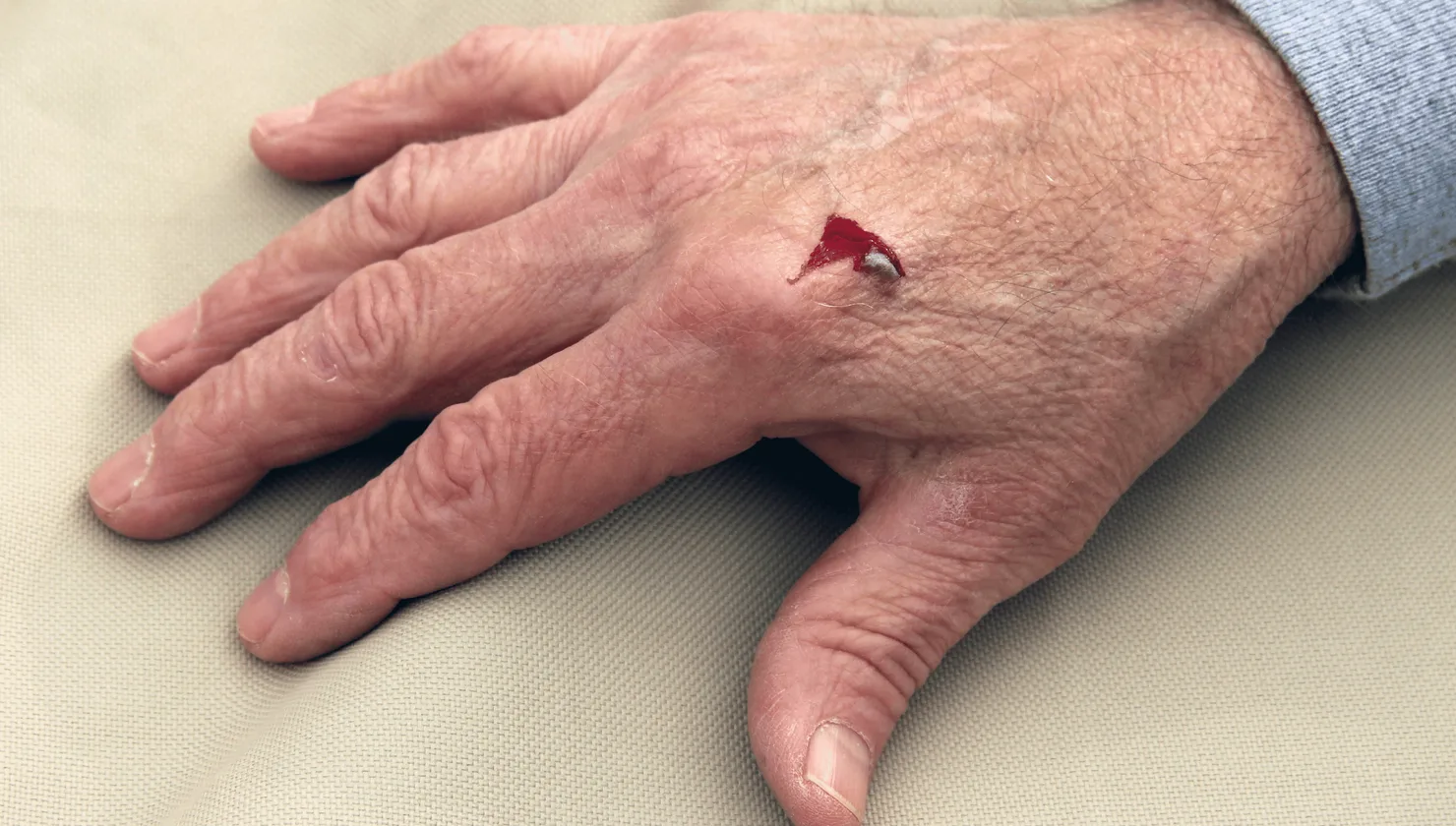
Symptoms
- Bleeding: Some bleeding is normal; steady bleeding that soaks through a cloth or does not slow after 10 to 15 minutes of firm pressure is a warning sign.
- Gaping edges: A cut whose edges pull apart or do not stay together on their own usually needs stitches, staples, or skin glue to heal well.
- Depth: A wound that looks deep or exposes yellowish fat, muscle, or bone needs professional closure and evaluation.
- Pain, numbness, or weakness: Numbness, tingling, or trouble moving the area beyond the cut can signal nerve or tendon injury.
- Location: Cuts on the face, hands, fingers, feet, or across a joint often need careful repair for function and appearance.
- Foreign material: Glass, metal, gravel, or dirt you cannot fully rinse out raises the risk of infection and may need removal.
- Signs of infection: Increasing redness, warmth, swelling, pus, or a red streak spreading from the wound over hours to days suggests infection.
When it's an emergency
Emergency care for cuts and lacerations
Call 911 immediately for life-threatening symptoms or if you cannot travel safely. Do not drive yourself or delay for online booking.
For other urgent symptoms, seek prompt emergency evaluation. Bellaire ER accepts walk-ins 24/7. For facility questions, call (713) 660-0001.
Come straight to the ER if bleeding is severe, spurts, or will not stop after 10 to 15 minutes of firm, continuous pressure, or if the person feels faint, dizzy, or looks pale and sweaty. These can be signs of significant blood loss.
Come to Bellaire ER for a cut that is deep or gaping, exposes fat, muscle, tendon, or bone, or is longer than about half an inch, especially on the face, hands, fingers, feet, or over a joint. Also come in for deep puncture wounds, animal or human bites, and cuts you cannot get clean of glass, gravel, or debris.
Go to the ER if you notice numbness, tingling, weakness, or an inability to move the area past the cut, which can mean a nerve or tendon is damaged, or if the wound was caused by a dirty or rusty object and your last tetanus shot was more than 5 years ago (or you are unsure).
Watch for infection after any wound: spreading redness, warmth, swelling, pus, a red streak moving away from the cut, or fever. These warrant prompt evaluation, Bellaire ER evaluates and treats wounds on-site 24/7, no appointment needed.
When it's not an emergency
Small, shallow cuts and scrapes that stop bleeding within a few minutes of gentle pressure can usually be cared for at home. Rinse under clean running water, apply pressure until bleeding stops, cover with a clean bandage, and keep it clean and dry as it heals.
Bellaire ER is the faster answer for a cut you are unsure about, for whether a small wound needs closure, and for checking a healing wound that looks mildly irritated but has no spreading redness, pus, or fever. A clinician can look at photos or the wound and advise whether you need to be seen in person.
For timely closure, keep in mind that most cuts needing stitches are best repaired within about 6 to 24 hours; when in doubt about a deeper or gaping wound, it is safer to be evaluated in person rather than wait.
What else could be causing this
- Incised wound (clean cut)
- A cut from a sharp edge: a knife, a blade, glass. The edges are straight and come together neatly, which makes it the easiest kind of wound to close well. Depth matters more than length here, because a sharp edge can divide a tendon or nerve without looking dramatic.
- Laceration from blunt force
- Skin split by an impact rather than cut by an edge, as in a fall or a blow. The edges are ragged and bruised, there is more damage to surrounding tissue, and the force that split the skin may also have broken bone underneath. These need more cleaning and careful trimming before closure.
- Puncture wound
- A deep, narrow track from a nail, a needle, a tooth or a piece of wire. The skin opening looks trivial and the depth is unknown, which is exactly the problem: debris is carried inward, the wound cannot be irrigated as effectively, and infection risk is higher than the appearance suggests. These are usually not closed tightly.
- Animal or human bite
- A crushing and puncturing injury loaded with bacteria. Dog bites crush, cat bites puncture deeply with a high infection rate, and human bites, including a cut over a knuckle from striking a tooth, are among the most prone to serious infection. Bites are often deliberately left open or only loosely closed, and antibiotics are frequently used.
- Avulsion and degloving
- Skin and the layer beneath it torn partly or completely away from what lies below, typically in machinery, bicycle or road injuries. There may be a flap with uncertain blood supply. These need assessment of whether the tissue will survive, and some need a specialist rather than simple closure.
- Crush injury
- Tissue compressed between two surfaces: a car door, a hammer, machinery. The visible cut understates the injury: muscle, bone and blood supply beneath may be damaged, and swelling continues for hours. Fingertips and the hand are the common sites, and a fracture often accompanies the skin wound.
- Retained foreign body
- Glass, metal, gravel, wood or grit left in the wound. It keeps the wound from healing, causes infection, and may not be felt. Wood and organic material are particularly prone to infection and are poorly seen on X-ray, which is why the mechanism of injury guides the search as much as imaging does.
- Tendon or nerve injury
- A cut that has gone through more than skin. The clue is function, not depth: inability to bend or straighten a finger joint, numbness in a specific patch beyond the cut, or weakness in a particular movement. Easy to miss in a wound that otherwise looks minor, and the reason hand and finger cuts are examined carefully.
- Wound infection
- Not a mechanism but a complication, and the reason many people come in days after the injury. Increasing redness, warmth, swelling, pus, a red streak tracking away from the wound, or fever appearing one to several days after a cut. Pain that is increasing rather than settling after 48 hours is the earliest sign.
What happens when you arrive
At Bellaire ER, a board-certified emergency physician examines the wound to check its depth and whether nerves, tendons, blood vessels, or underlying structures are involved. When needed, on-site X-ray, CT, or ultrasound can look for retained glass or metal, a foreign body, or an associated fracture.
The wound is thoroughly cleaned and irrigated to remove debris and lower infection risk. The area is numbed with local anesthetic, and the physician closes the cut using the best method for its size and location, typically sutures (stitches), surgical staples, or skin adhesive (skin glue), and applies a dressing.
We update your tetanus vaccination if you are due, and antibiotics are prescribed when the wound is high-risk, such as bites, heavily contaminated wounds, or certain puncture wounds. We diagnose, close, and treat in a single visit, and most patients do not need a hospital transfer.
Before you leave, your physician explains how to care for the wound at home, signs of infection to watch for, and when and where to have stitches or staples removed.
Tests we can run on site
- Wound examination and exploration
- The wound is examined after the bleeding is controlled and the area numbed: depth, what lies at the base, whether fat, muscle, tendon or bone is visible, and whether anything is retained. This is the main diagnostic step, and it is more informative than any scan for most cuts.
- Neurological and tendon function testing
- Testing sensation and each movement beyond the wound. It identifies a divided tendon or nerve, which changes the repair from a straightforward closure to an injury needing specialist follow-up. It is done before the local anesthetic is given, because numbing the area makes sensation untestable.
- X-ray
- On-site imaging that shows fractures under a wound and most radio-opaque foreign bodies: glass, metal, gravel. It is reliable for glass and metal and unreliable for wood and plastic, so a normal X-ray does not always mean nothing is retained.
- Ultrasound
- Bedside sound-wave imaging, without radiation. It finds foreign material that an X-ray misses, including wood and some plastics, and shows pockets of fluid or pus in a wound that has become infected.
- CT scan
- Cross-sectional imaging, used when the injury is deep, over the face or skull, or when an X-ray and ultrasound have not answered the question. It defines how far an injury extends and whether structures below the skin are involved.
- Wound culture
- A sample sent when a wound is already infected or pus is drained. It identifies the organism and which antibiotics it responds to, which matters when the first antibiotic has not worked.
- Blood work
- Used selectively rather than routinely, a blood count and inflammatory markers when infection may have spread, and clotting tests or a blood count when bleeding has been significant or the patient takes a blood thinner.
Treated here, or transferred
Bellaire ER is a licensed freestanding emergency room: board-certified emergency physicians and nurse practitioners, on-site CT, X-ray, ultrasound and laboratory, medication administered on site, open 24 hours a day, 365 days a year for adults and children. It is equipped for emergency evaluation, stabilization and treatment, and it is not a hospital.
Wound repair is core emergency room work, and most cuts are handled here start to finish. Bleeding is controlled, the area is numbed with local anesthetic, the wound is irrigated thoroughly. Cleaning matters more to the result than the closure does: and it is closed with sutures, staples or skin adhesive, whichever suits the site and the wound. Tetanus vaccination is updated if you are due, antibiotics are started during your visit and prescribed for you to fill at your pharmacy when the wound is high-risk, and a dressing and written care instructions go home with you.
Some wounds need more than closure. A divided tendon or nerve, an injury to an artery, a wound involving the eye or eyelid margin, an open fracture, an extensive degloving injury, or a complex facial repair needs a hand surgeon, plastic surgeon, ophthalmologist or orthopaedic surgeon, and a freestanding emergency room has no operating room. In those cases the wound is cleaned, bleeding is controlled, the injury is imaged, tetanus and antibiotics are given, and the limb is splinted and dressed here, then you are transferred to the service that will perform the definitive repair. Starting that work early protects the result. Transfer is a normal part of managing a complex wound, not a failure of the visit.
Timing is part of the decision. Most wounds needing closure are best repaired within roughly the first day, and a heavily contaminated wound, a bite or an older wound may be deliberately left open and dressed rather than closed, because closing infection inside a wound causes more harm than leaving it to heal open.
Children
Children get cuts constantly, and most are minor, but a few things differ. The first is practical: a frightened child cannot be examined or repaired well, so distraction, topical numbing gel applied before any injection, and in some cases skin adhesive rather than sutures are chosen specifically because they are tolerated better. Skin glue works well on clean, straight cuts under low tension, a forehead or scalp cut, for instance, and spares a child the needle entirely.
The second is what the injury implies. A cut inside the mouth, through the lip border, on the ear, or near the eye needs careful assessment. A child who fell and cut their head may also have a head injury, and the cut is not the thing to focus on if there was loss of consciousness, repeated vomiting, worsening drowsiness or a seizure. Bites to a child's face are common and are treated as high-risk wounds.
Bring a child in for any cut that is gaping, deep, bleeding persistently, on the face, hands or across a joint, caused by a bite, or that cannot be cleaned of debris. Confirm their immunizations are current, tetanus protection in children comes from the routine childhood schedule, and a gap is worth checking. Come straight in for severe bleeding, or if a child is pale, floppy or unusually drowsy after an injury.
Bellaire ER treats adults and children, with on-site X-ray and ultrasound to look for fractures and retained foreign material. A child needing repair under general anesthesia, or a complex facial or hand injury requiring a pediatric surgical specialist, is cleaned, dressed, imaged and stabilized here and transferred to a hospital with that service. Watch a healing wound on a child for the same infection signs as in an adult, and keep them from picking at it. Which is most of the battle.
After you leave
Keep the wound clean and dry for the first day or two, then follow the washing instructions you were given. Leave skin adhesive alone. Do not pick at it, and do not apply ointment over it, which dissolves it. Change dressings as directed, elevate an injured hand or foot to limit swelling, and expect some soreness, mild redness at the edges and a little clear or pink fluid in the first couple of days.
Have stitches or staples removed when you were told, and where you were told. The timing differs by site, a face heals faster than a joint or the lower leg, and leaving them in too long leaves more of a mark while taking them out too early lets the wound open.
Come back if pain is increasing rather than settling after the first two days, if redness spreads beyond the wound edges, if the area becomes hot or tightly swollen, if pus appears, if a red streak tracks away from the wound, or if you develop a fever. Return too if the wound opens up, if bleeding restarts and does not stop with ten to fifteen minutes of firm pressure, or if you notice numbness or cannot move a finger, toe or joint the way you could before.
Pain out of all proportion to how the wound looks, skin turning dusky or purple, blistering, or a crackling feeling under the skin needs emergency evaluation immediately rather than a watchful day at home. Expect a scar from any wound that needed closure; protecting it from sun for several months reduces how noticeably it darkens.
What this visit costs
We accept most major insurance and bill your insurer directly. For emergency care, federal law caps what you pay at in-network rates and bars surprise bills, your deductible and copay still apply. Never delay emergency care over cost.
See how ER billing worksInsurance and coverage questionsRead the facility notice
Questions about a specific plan? Call (713) 660-0001. Only your plan can tell you how a claim will be processed.
Lowering your risk
Reduce your risk of serious cuts by using sharp tools carefully and with the right technique, wearing cut-resistant gloves and eye protection for tasks like slicing, carving, or using power tools, and keeping knives and blades stored safely away from children.
Clean up broken glass promptly, wear shoes in areas where glass or metal may be present, and keep work surfaces and floors clear. Keeping your tetanus vaccination up to date (a booster roughly every 10 years) helps protect you if a cut does happen.
Common questions
When should I go to the ER for a cut or laceration?
Go to the ER if bleeding does not stop after 10 to 15 minutes of firm pressure, if the cut is deep or gaping, or if it exposes fat, muscle, or bone. Also seek emergency care for cuts on the face, hands, or over a joint, deep puncture wounds, animal or human bites, or if you have numbness or cannot move the area. Bellaire ER treats cuts and lacerations 24/7 without an appointment.
Which cuts need stitches?
A cut generally needs stitches, staples, or skin glue when its edges gape apart, when it is deeper than about a quarter inch, or when it is longer than roughly half an inch. Cuts on the face, hands, fingers, feet, or across a joint, and any wound that keeps bleeding, also usually need professional closure. For the best healing and lowest infection risk, most wounds needing stitches should be closed within about 6 to 24 hours.
Can I treat a minor cut at home or with telemedicine?
Yes. Small, shallow cuts that stop bleeding with gentle pressure can usually be treated at home by rinsing with clean water, applying pressure, and covering with a clean bandage. Bellaire ER can tell you in person, 24/7, when you are unsure whether a wound needs closure or want a healing cut checked. Come to the ER if the cut is deep, will not stop bleeding, or shows spreading redness, pus, or fever.
What does Bellaire ER do to treat a cut or laceration?
A board-certified emergency physician examines and cleans the wound, uses on-site X-ray, CT, or ultrasound if a foreign body or fracture is suspected, and numbs the area with local anesthetic. The cut is then closed with stitches, staples, or skin glue, your tetanus shot is updated if needed, and antibiotics are given for high-risk wounds. Treatment is completed in a single visit and most patients do not need a hospital transfer.
Do I need a tetanus shot after a cut?
You may need a tetanus booster if your wound was caused by a dirty or rusty object, involves a puncture or bite, or is contaminated with soil, and it has been more than 5 years since your last tetanus shot. For a clean minor cut, a booster is generally recommended if it has been more than 10 years. If you are unsure of your vaccination history, Bellaire ER can update it during your visit.
Why prompt attention matters
Wound size is not the only thing that matters. Depth, contamination, location, and how long the wound has been open all affect whether it needs closure and whether infection is a risk.
Get care at Bellaire ER
Walk in any time at 5302 Bellaire Blvd, Bellaire, TX 77401 (get directions) or call 713-660-0001. No appointment is required to be seen, though you can save your spot online if you prefer.
Sources & further reading
Medical information on this page is consistent with guidance from these trusted organizations:
People also ask
When should I go to the ER for cuts and lacerations?
Go to the ER for a cut that keeps bleeding after 10 to 15 minutes of pressure, gapes open, is deep, or is on the face, hands, or a joint. Most wounds needing stitches should be closed within 6 to 24 hours, so do not wait to be seen.
Read full answer →