
Sprains and Strains
A sprain is a stretched or torn ligament (the tissue that connects bone to bone), while a strain is a stretched or torn muscle or tendon. A fracture is a broken bone. Because a severe sprain and a fracture can cause the same pain, swelling, and difficulty moving, an X-ray is often the only reliable way to tell them apart. Bellaire ER has on-site X-ray to rule out a fracture and treat the injury in a single 24/7 visit.
- Open now, 24/7/365
- Walk in, no appointment
- 5302 Bellaire Blvd, free parking
Unsure if Your Symptoms Require Emergency Care?
Call our clinical triage desk at (713) 660-0001. An on-duty board-certified emergency physician will evaluate your symptoms before you leave home.
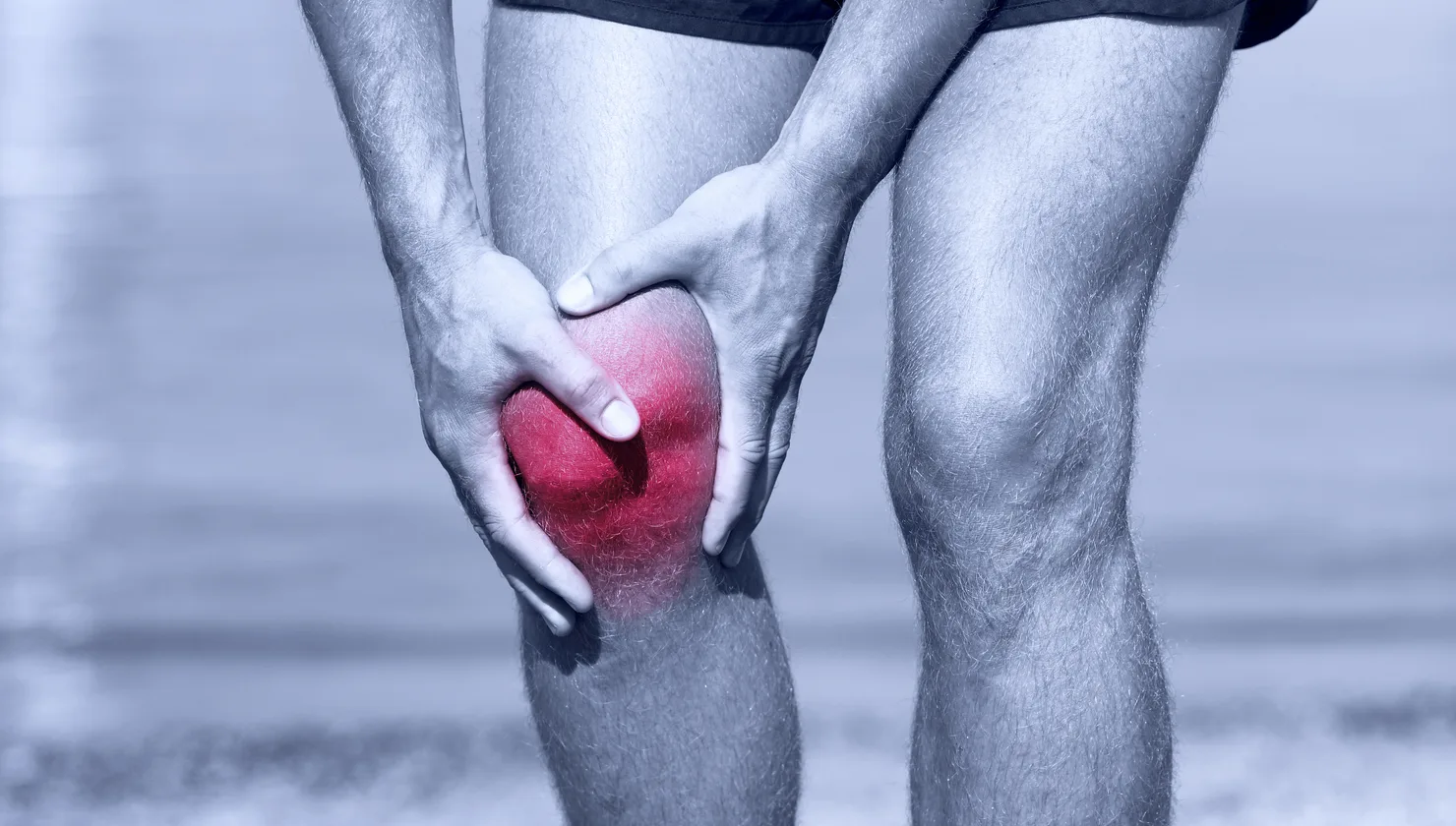
Symptoms
- Pain: Sharp or aching pain at the joint or muscle that worsens with movement or weight-bearing.
- Swelling: Rapid swelling around the injured joint or muscle, often within minutes to hours.
- Bruising: Discoloration that develops over hours to days as small blood vessels are damaged.
- Limited motion: Difficulty moving the joint or using the muscle through its normal range.
- Popping sensation: A pop or snap felt or heard at the moment of injury, common with a torn ligament.
- Instability: A feeling that the joint gives way, buckles, or cannot bear weight (more typical of a sprain).
- Muscle spasm or weakness: Cramping, tightness, or loss of strength in the affected muscle (more typical of a strain).
When it's an emergency
Emergency care for sprains and strains
Call 911 immediately for life-threatening symptoms or if you cannot travel safely. Do not drive yourself or delay for online booking.
For other urgent symptoms, seek prompt emergency evaluation. Bellaire ER accepts walk-ins 24/7. For facility questions, call (713) 660-0001.
Come straight to Bellaire ER: open 24/7, if you have signs that suggest a broken bone or serious injury (call 911 if you cannot travel safely): a visibly deformed, crooked, or bent limb; bone pushing against or through the skin; or a snap or crack heard at the moment of injury followed by immediate, severe swelling.
Seek emergency care if you cannot bear any weight on the leg or foot, cannot take four steps, or cannot move or use the injured joint at all. These can be signs of a fracture rather than a simple sprain.
Get immediate care for numbness, tingling, or a cold, pale, or bluish limb, finger, or toe below the injury. This can mean nerves or blood flow are affected and needs urgent evaluation.
Also come in for severe or rapidly worsening pain and swelling, a wound over the injury, or any injury that does not clearly improve with rest, ice, and elevation over a few days.
When it's not an emergency
Most mild sprains and strains can be cared for at home with the RICE method: Rest the injury, apply Ice for 15 to 20 minutes several times a day, use Compression with an elastic bandage, and Elevate the area above heart level to reduce swelling. Over-the-counter pain relievers such as acetaminophen or ibuprofen can help if you have no reason to avoid them.
If you can bear weight and move the joint, the pain is mild to moderate, and there is no deformity or numbness, a telemedicine visit or a call to your primary care doctor is a reasonable first step. Seek in-person care if pain, swelling, or bruising is not improving after two to three days, or if you are unsure whether the bone is broken.
What else could be causing this
- Ligament sprain
- A stretched or torn ligament, most often the outside of the ankle after the foot rolls inward, or the knee, wrist or thumb. Swelling comes on fast, the joint feels unstable, and many people describe a pop at the moment of injury. Sprains are graded by how much of the ligament is torn, which is what determines whether this takes a week or a season.
- Muscle or tendon strain
- A stretched or torn muscle or the tendon anchoring it, typically a hamstring, calf, groin or lower back. The pain is in the meat of the muscle rather than over a joint, worsens when you contract against resistance, and often comes with cramping or spasm. Bruising can appear a day or two later, sometimes well below the injury as blood tracks downward.
- Fracture
- A broken bone, which can produce exactly the pain, swelling and bruising of a bad sprain. Bone tenderness at a single point, inability to put weight through the limb, visible deformity, or a crack heard at the time all raise suspicion. Some fractures: a hairline crack, a small chip pulled off by a ligament, a scaphoid fracture in the wrist, are invisible on examination and nearly invisible on the first X-ray, which is why follow-up is part of the plan.
- Complete tendon rupture
- A tendon torn through rather than strained. The Achilles at the back of the ankle, the quadriceps or patellar tendon at the knee, and the biceps at the shoulder or elbow are the usual ones. The giveaway is a sudden pop with the sensation of being kicked or struck from behind, followed by inability to do a specific movement, pushing off the toes, straightening the knee, even when pain settles. These are often misread as sprains and need specialist assessment.
- Dislocation or partial dislocation
- The joint surfaces come out of position, fully or partly, most commonly at the shoulder, finger, kneecap or elbow. The joint looks wrong, holds itself in an odd position, and will not move normally. Some pop back in on their own, leaving a joint that feels unstable and bruised afterward. Which is still an injury that needs imaging, because dislocations commonly break off a piece of bone on the way.
- Cartilage or internal joint injury
- A meniscus tear in the knee, a labral tear in the shoulder or hip, or damage to the joint surface. These often cause less dramatic early swelling but produce clicking, catching, locking or a joint that gives way, and they tend not to settle with rest the way a simple sprain does. An injury that is no better at three weeks belongs in this group more often than not.
- Joint pain that is not an injury
- Gout, an inflammatory arthritis flare, cellulitis, or a septic joint can all produce a hot, swollen, painful joint with no injury at all, and people frequently supply a minor twist as an explanation. Fever, redness of the overlying skin, a joint too painful to move in any direction, or swelling that started without a clear event changes the evaluation entirely. An infected joint is time-critical.
- A blood clot mistaken for a calf strain
- Deep vein thrombosis causes calf pain, swelling and tenderness that feels like a pulled muscle. Clues are swelling of the whole calf rather than one spot, warmth and redness, no specific moment of injury, and risk factors such as recent surgery, a long flight, immobility, pregnancy or a previous clot. Breathlessness or chest pain with calf pain means emergency care now, not rest and ice.
- Compartment syndrome
- Pressure building inside the muscle compartment after a significant injury, squeezing the blood supply. The hallmark is pain that is far out of proportion to the injury, keeps escalating, is not relieved by elevation or pain medication, and worsens sharply when the muscle is stretched. Numbness, tingling or a tight, hard swollen limb completes the picture. It is uncommon, it is a surgical emergency, and it is the reason severe unremitting pain after a limb injury is never waited out at home.
What happens when you arrive
When you arrive at Bellaire ER with a sprain or strain, a board-certified emergency physician examines the injured area, checks your range of motion, circulation, and sensation, and asks how the injury happened.
If a fracture is possible, we take an X-ray on site to rule out a broken bone. Our full imaging suite also includes CT and ultrasound when a deeper injury is suspected. Because everything is on site, you get answers during the same visit.
Once the injury is diagnosed, your physician treats it. This may include a splint, brace, wrap, crutches, pain control, and clear home-care instructions. We diagnose and treat in a single visit, and most patients do not need a hospital transfer. Before you leave, your physician explains your results and gives you a follow-up plan.
Tests we can run on site
- Focused examination of the joint and limb
- A physician identifies exactly where the tenderness is, tests the ligaments for stability, checks range of motion and strength, and establishes whether you can bear weight. Where the bone is tender, and whether you can take steps, feed directly into the established criteria used to decide whether an X-ray is needed, the examination is not a substitute for imaging, it is what selects it.
- Neurological and circulation check
- Pulses, skin color and temperature, capillary refill, sensation and movement beyond the injury. This is the part of the assessment that looks for a nerve or blood vessel problem or the beginnings of compartment pressure, and it is repeated rather than done once.
- X-ray
- The test that separates a sprain from a fracture, done on site. It shows breaks, chips pulled off by a ligament, dislocations, and the alignment of the joint. It is quick, and for most limb injuries it is the only imaging needed.
- CT scan
- Cross-sectional imaging used when a fracture is strongly suspected but the X-ray is normal or hard to interpret, and for complex areas such as the wrist, ankle, elbow or pelvis where overlapping bones hide a break. It shows how many pieces there are and whether the joint surface is involved, which is what an orthopedic surgeon needs to know.
- Ultrasound
- Sound-wave imaging without radiation, used at the bedside to look at tendons, muscle tears and fluid collections, and to check the deep veins of the leg when a clot is a possibility rather than a strain.
- Blood work
- Not needed for a straightforward sprain. The on-site laboratory is used when infection, gout or a clotting problem is in question: a blood count, inflammatory markers, uric acid, or a D-dimer, because those conditions are treated completely differently from an injury.
- Repeat imaging after a week or so
- Some fractures only become visible on X-ray once healing starts, the scaphoid bone in the wrist being the classic example. If the examination suggests a fracture that the first X-ray does not show, the standard approach is to splint, treat it as a fracture, and re-image or refer. A normal first X-ray is not the end of the question.
Treated here, or transferred
Bellaire ER is a licensed freestanding emergency room, open 24 hours a day, 365 days a year, staffed by board-certified emergency physicians and nurse practitioners, with on-site CT, X-ray, ultrasound and laboratory, and medication given on site during your visit. It is equipped for emergency evaluation, stabilization and treatment, and it is not a hospital. There is no operating room here, which matters for the minority of limb injuries that need one.
Most sprains, strains and simple fractures are handled here from start to finish. That means imaging to establish what the injury is, then a splint, brace, wrap, boot or crutches, pain and swelling control, pain relief given during your visit with a prescription written for you to fill at your own pharmacy, written instructions on weight-bearing and ice, and a specific follow-up or orthopedic referral. Wounds over an injury are cleaned and closed and tetanus protection updated where needed.
Being told the X-ray is normal is a result, not a brush-off. A graded sprain has a known course and a known rehabilitation plan, and leaving with the right support, the right instructions and the right follow-up is the treatment.
Some injuries need a hospital. An open fracture, a fracture or dislocation requiring surgery, a displaced fracture that cannot be held in position, a hip fracture, a suspected compartment syndrome, a joint that may be infected, or any injury with compromised circulation will be stabilized here: splinted, pain controlled, imaged, and transferred to the appropriate hospital or orthopedic service. Transfer is a normal part of how a freestanding emergency room works, not a failure of the visit.
Children
Bellaire ER treats adults and children. Children are built differently in a way that changes everything about this injury: in a growing child the ligaments are relatively strong and the growth plate at the end of the bone is the weak point, so the force that sprains an adult ankle often fractures a child's growth plate instead. A genuine sprain is uncommon before the teenage years, and any child with significant pain and swelling around a joint is treated as a possible fracture until imaging says otherwise.
Growth plate fractures and the buckle-type fractures young children get can be subtle or invisible on a first X-ray, so a child may be splinted and re-examined or re-imaged rather than cleared. This is deliberate, because a growth plate injury that is missed can affect how the bone grows.
The most useful sign in a child is refusal to use the limb. A child who will not walk, will not bear weight, will not use an arm, or protects it constantly needs to be seen, even if nothing looks swollen and even if no one saw an injury. A limp or a painful joint with a fever, or with no injury at all, needs same-day evaluation, infection in a joint or bone presents this way and is treated urgently.
Two specific situations are worth recognizing. A toddler whose arm is pulled while being lifted by the hand may hold the arm still and refuse to use it, which is a common and treatable elbow problem. And a child under walking age who has a limb injury with no clear explanation is looked at carefully by clinicians, as are injuries whose account changes, those questions are routine and are part of caring for the child.
After the visit, children generally need less formal rehabilitation than adults but are far worse at respecting restrictions. Keep the brace or boot on, keep them off the trampoline and out of contact sport until cleared, and keep the follow-up appointment.
After you leave
For the first 48 hours, the work is swelling control: ice for 15 to 20 minutes at a time several times a day, compression, and keeping the limb elevated above the level of the heart as much as you reasonably can. Swelling is what makes the second and third day feel worse than the first, and elevation does more about it than any medication.
After that, protected movement rather than total rest. Prolonged immobility stiffens a joint and weakens the muscle around it, so follow the instructions you were given about how much weight to put through the limb and when to start moving it. Most mild sprains and strains improve markedly within one to two weeks; moderate ones take several weeks; a severe ligament tear or a fracture takes longer and usually needs supervised rehabilitation. Keep a brace or boot on as directed, including for the parts of the day when it feels unnecessary.
Come back promptly if pain keeps escalating instead of easing, particularly if it is not relieved by elevation and medication, that pattern is the one that matters. Return for numbness, tingling, or toes or fingers that become cold, pale, blue or will not move, for a splint or cast that feels too tight or has become wet or damaged, for new or worsening swelling after the first few days, or if you develop a fever, spreading redness or warmth over the joint.
Book the follow-up you were given even if things are going well, especially where a fracture was suspected but not seen. An injury that is no better at two to three weeks, a joint that locks, catches or gives way, or a movement you still cannot do: standing on tiptoe, straightening the knee, lifting the arm, needs reassessment rather than more time. Those are the injuries that turn out to be a tendon rupture, a cartilage tear or a fracture the first X-ray did not show.
What this visit costs
We accept most major insurance and bill your insurer directly. For emergency care, federal law caps what you pay at in-network rates and bars surprise bills, your deductible and copay still apply. Never delay emergency care over cost.
See how ER billing worksInsurance and coverage questionsRead the facility notice
Questions about a specific plan? Call (713) 660-0001. Only your plan can tell you how a claim will be processed.
Lowering your risk
Warm up before exercise and stretch afterward, and increase the intensity of activity gradually rather than all at once. Building strength and flexibility in the muscles around your joints helps them absorb stress.
Wear supportive, well-fitting footwear for your activity, and use proper technique when lifting or playing sports. Keep floors and walkways clear of clutter and use good lighting to reduce trips and falls, which are a common cause of ankle and wrist sprains.
Common questions
How can I tell a sprain from a fracture?
You often cannot tell them apart by feel alone, because a severe sprain and a broken bone both cause pain, swelling, bruising, and trouble moving. Warning signs that point more toward a fracture include a visible deformity, bone tenderness directly over the bone, inability to bear weight or take four steps, or a snap heard at the time of injury. The only reliable way to confirm is an X-ray, which we perform on site at Bellaire ER.
What is the difference between a sprain and a strain?
A sprain is an injury to a ligament, the tough tissue that connects one bone to another at a joint; ankles, knees, and wrists are common sites. A strain is an injury to a muscle or a tendon, the tissue that attaches muscle to bone; the lower back and hamstrings are common sites. Sprains more often cause joint swelling and instability, while strains more often cause muscle spasm and weakness. Both are treated with rest and, in some cases, a splint or brace.
How do I treat a sprain or strain at home?
For mild injuries, use the RICE method: Rest the area, apply Ice for 15 to 20 minutes several times a day, wrap it with Compression using an elastic bandage, and Elevate it above heart level to limit swelling. Over-the-counter pain relievers such as acetaminophen or ibuprofen can ease discomfort if you have no reason to avoid them. If pain and swelling are not improving after two to three days, have the injury checked.
Do I need an X-ray for a sprained ankle?
Not every sprain needs an X-ray, but you should have one if you cannot bear weight, have bone tenderness at the ankle, notice a deformity, or the injury is not improving. An X-ray rules out a fracture that can look identical to a bad sprain. Bellaire ER has on-site X-ray available 24/7, so you can get an answer during the same visit.
How long does a sprain or strain take to heal?
Mild sprains and strains often improve within one to three weeks with rest and home care, while moderate injuries can take several weeks and severe tears may take months or need specialist care. Returning to activity too soon raises the risk of re-injury. If pain, swelling, or instability lasts beyond a few weeks, follow up with a physician for further evaluation.
Why prompt attention matters
Sprains and strains are common but should not be brushed off. Inability to bear weight, significant deformity, or numbness points to a possible fracture and needs imaging.
Get care at Bellaire ER
Walk in any time at 5302 Bellaire Blvd, Bellaire, TX 77401 (get directions) or call 713-660-0001. No appointment is required to be seen, though you can save your spot online if you prefer. A telehealth visit is available for mild, non-emergency concerns.
Sources & further reading
Medical information on this page is consistent with guidance from these trusted organizations:
People also ask
When should I go to the ER for sprains and strains?
Go to the ER for a sprain or strain if you cannot bear weight or take four steps, the limb looks deformed, there is bone tenderness or numbness, or the pain and swelling are severe. Mild injuries with preserved movement can often start with home care, telemedicine, or your primary doctor.
Read full answer →