
Heartburn
Heartburn and a heart attack are genuinely hard to tell apart, and the test that separates them is not one you can do at home. Call 911 if chest pain is severe, spreads to your arm, jaw or back, comes with shortness of breath or sweating, or does not ease with an antacid. Bellaire ER runs an EKG and cardiac blood work on site, 24/7, and settles that question during the visit rather than sending you elsewhere for the answer.
- Open now, 24/7/365
- Walk in, no appointment
- 5302 Bellaire Blvd, free parking
Unsure if Your Symptoms Require Emergency Care?
Call our clinical triage desk at (713) 660-0001. An on-duty board-certified emergency physician will evaluate your symptoms before you leave home.
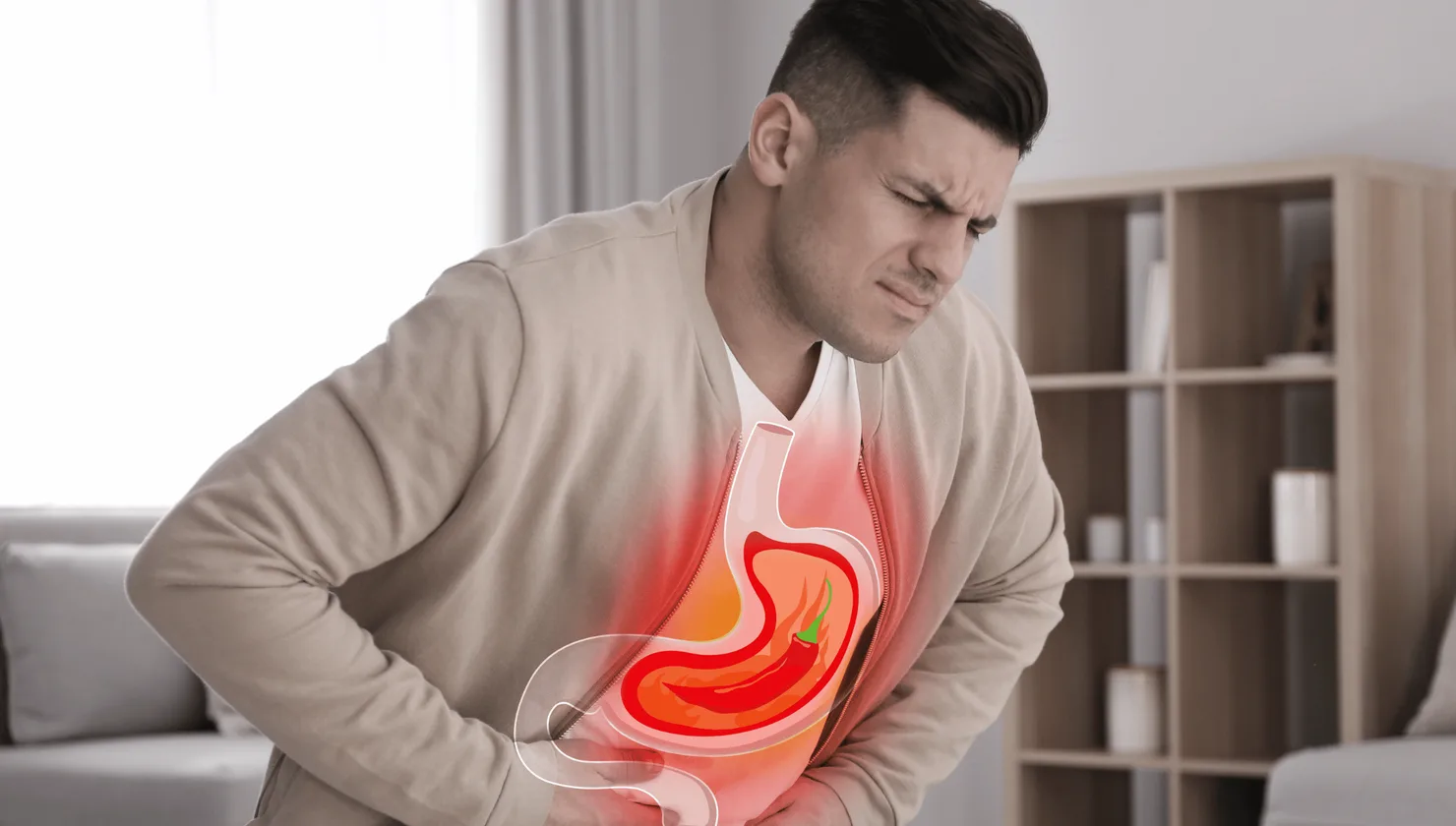
Symptoms
- Burning sensation behind the breastbone: A hot or burning feeling in the center of the chest, often rising toward the throat.
- Sour or acidic taste: Stomach acid or a bitter, sour taste backing up into the throat or mouth (regurgitation).
- Worse after eating or lying down: Discomfort that flares after large or fatty meals, or when bending over or lying flat.
- Burning in the throat: Irritation, hoarseness, or a lump-like feeling in the throat from acid exposure.
- Nighttime symptoms: Reflux that disrupts sleep or triggers a chronic cough or wheezing.
When it's an emergency
Emergency care for heartburn
Call 911 immediately for life-threatening symptoms or if you cannot travel safely. Do not drive yourself or delay for online booking.
For other urgent symptoms, seek prompt emergency evaluation. Bellaire ER accepts walk-ins 24/7. For facility questions, call (713) 660-0001.
Heartburn and a heart attack can feel alike, and it is not always possible to tell them apart at home. Call 911 immediately if chest pain or pressure is severe, lasts more than a few minutes, or spreads to the arm, jaw, neck, or back. These can be signs of a heart attack, not simple reflux.
Also call 911 if chest discomfort comes with shortness of breath, sweating, nausea, lightheadedness, or a racing or irregular heartbeat. Do not wait to see if the feeling passes, and do not drive yourself.
Go to the ER for digestive red flags too: trouble or pain when swallowing, food that feels stuck, vomiting blood or material that looks like coffee grounds, black or tarry stools, or unexplained weight loss. These can point to bleeding, a narrowed esophagus, or another serious problem.
If you are unsure whether your symptoms are heartburn or something more serious, treat it as an emergency. Bellaire ER is open 24/7 at 5302 Bellaire Blvd and can quickly rule out a cardiac cause.
When it's not an emergency
Occasional heartburn after a large, spicy, or fatty meal is common and usually not an emergency. Mild, familiar symptoms often ease with an over-the-counter antacid, staying upright after eating, and avoiding known trigger foods.
If your symptoms are mild and you have no cardiac warning signs, a telemedicine visit or your primary care doctor is a reasonable place to start. They can review your triggers, suggest an acid-reducing medication, and arrange follow-up.
Frequent heartburn, two or more times a week, may be gastroesophageal reflux disease (GERD) and is worth discussing with a doctor, but it is typically handled in an outpatient setting rather than the ER. Seek urgent evaluation only if red-flag symptoms appear or the pain could be your heart.
What else could be causing this
- Acid reflux and GERD
- Stomach acid passing back up through a weakened valve at the base of the esophagus. Burning behind the breastbone that rises toward the throat, worse after large or fatty meals, worse lying flat or bending over, often with a sour taste. This is heartburn proper, and when it happens twice a week or more it is called GERD.
- Heart attack or angina
- Reduced blood flow to heart muscle. It is on this list because cardiac pain presents as indigestion often enough that the overlap is the entire clinical problem. The features that shift suspicion toward the heart are pressure rather than burning, onset with exertion, spread to the arm, jaw, neck or back, and company: sweating, breathlessness, nausea or faintness. Antacids appearing to help does not rule it out.
- Esophagitis
- Inflammation of the esophageal lining, from acid, from certain medications taken without enough water, or from infection in someone immunosuppressed. The burning is more constant than meal-related, and swallowing often hurts, which plain reflux does not usually cause.
- Peptic ulcer
- An ulcer in the stomach or the first part of the small intestine, from H. pylori infection or from regular anti-inflammatory use. Gnawing upper abdominal pain that may be relieved or provoked by eating, often waking the person at night. It is the cause that can bleed, which is why black stools or vomiting blood changes the urgency completely.
- Gastritis
- Inflammation of the stomach lining, commonly from alcohol, anti-inflammatory medication or H. pylori. Burning or gnawing in the upper abdomen with nausea and early fullness. It overlaps with ulcer disease and is distinguished by what is seen on endoscopy rather than at the bedside.
- Gallbladder disease
- Gallstones causing pain after fatty meals, classically in the right upper abdomen and spreading to the right shoulder blade, often at night, with nausea. Frequently mistaken for severe heartburn. Fever, jaundice or persistent pain lasting hours means it has moved beyond simple stones.
- Esophageal spasm
- The muscle of the esophagus contracting abnormally. Squeezing chest pain that can be severe and can closely imitate cardiac pain, sometimes triggered by very cold or hot drinks, sometimes with food sticking. It is a diagnosis made after the heart has been excluded.
- Hiatal hernia
- Part of the stomach sliding up through the diaphragm. It does not itself cause pain so much as make reflux easier and more persistent, and it explains heartburn that does not settle with the usual measures. A large one can cause chest discomfort and early fullness.
- Esophageal stricture or a swallowing problem
- Years of reflux narrowing the esophagus with scar tissue. The symptom shifts from burning to food feeling as if it is sticking, first with solids, then more widely. New difficulty swallowing, food genuinely getting stuck, or unexplained weight loss needs investigation rather than a stronger antacid.
- Pancreatitis
- Inflammation of the pancreas, usually from gallstones or alcohol. Severe, constant upper abdominal pain that bores through to the back and is often eased slightly by leaning forward, with vomiting. More severe and more persistent than reflux, and it needs emergency evaluation.
What happens when you arrive
When you arrive at Bellaire ER with chest discomfort, you are evaluated by a board-certified emergency physician. Because heartburn and a heart attack can look the same, we first work to rule out a cardiac cause, often with an ECG (heart tracing) and blood tests.
Our on-site lab, X-ray, CT, and ultrasound let us evaluate your heart, lungs, and digestive tract without sending you elsewhere. This helps us distinguish reflux from conditions such as a heart attack, gallbladder disease, or an ulcer.
If your symptoms are from acid reflux, we can provide medication to calm the burning and relieve discomfort. We diagnose and treat in a single visit, and most patients do not need a hospital transfer. Before you leave, your physician explains your results and gives a clear follow-up plan.
Tests we can run on site
- EKG (electrocardiogram)
- A recording of the heart's electrical activity, done early and usually first. It identifies an active heart attack, a previous one, a dangerous rhythm or strain on the heart. It is painless and takes a few minutes, and it is the reason indigestion-like chest pain is taken seriously rather than treated with an antacid and sent away.
- Troponin blood test
- A protein released when heart muscle is injured, and the single most useful blood test for a heart attack. Levels rise over hours, so more than one sample may be needed before a result is meaningful.
- Blood work
- A blood count for anemia from a slowly bleeding ulcer, liver and pancreatic enzymes for gallbladder and pancreatic causes, and a metabolic panel. These separate an upper abdominal cause from an esophageal one.
- Ultrasound
- Bedside sound-wave imaging without radiation. It is the test for gallstones, an inflamed gallbladder and the bile ducts, and it can also be used to look at the heart and the sac around it.
- Chest X-ray
- On-site imaging of the lungs, heart outline and diaphragm. It identifies pneumonia and other chest causes of the same discomfort, and can show a large hiatal hernia or free air from a perforated ulcer.
- CT scan
- Cross-sectional imaging, used when pancreatitis, a perforated ulcer, or a vascular cause is a possibility, or when the simpler tests have not explained severe pain. It answers questions an X-ray and ultrasound cannot.
- Stool testing for blood
- Checks for blood coming from the stomach or intestine, which points toward an ulcer rather than reflux. Combined with a blood count it shows whether bleeding has been going on long enough to matter.
Treated here, or transferred
Bellaire ER is a licensed freestanding emergency room: board-certified emergency physicians and nurse practitioners, on-site CT, X-ray, ultrasound and laboratory, medication administered on site, open 24 hours a day, 365 days a year for adults and children. It is equipped for emergency evaluation, stabilization and treatment, and it is not a hospital.
The main work of a heartburn visit to an emergency room is deciding what the burning actually is. Reflux, esophagitis, gastritis, esophageal spasm and uncomplicated ulcer pain are diagnosed and treated here, with symptom relief given during your visit, acid-suppressing medication prescribed for you to fill at your pharmacy, and a plan for outpatient follow-up. Most people with heartburn that turned out to be heartburn go home from here.
Some causes need a hospital. A heart attack requiring cardiac catheterization, a bleeding or perforated ulcer, an inflamed gallbladder needing surgery, pancreatitis requiring admission, or food genuinely impacted in the esophagus needing endoscopic removal will be stabilized here and transferred. A freestanding emergency room has no operating room and does not perform endoscopy; the EKG, blood tests and imaging that identify the problem are done here, treatment and monitoring begin here, and both continue during transfer to the service that will take over. Transfer is a normal result of the evaluation, not a failure of it.
The lasting treatment of reflux is not an emergency room matter. Diet and weight, raising the head of the bed, not eating late, and a planned course of acid suppression under a primary physician or gastroenterologist are what change the pattern. Frequent heartburn needs that outpatient plan, and repeat emergency visits are not a substitute for it.
Children
Reflux in infants is usually normal rather than a disease. Most babies spit up, it peaks around four months, and it resolves on its own in the great majority by their first birthday. A baby who brings milk up but feeds well, is content and is gaining weight is a happy spitter and needs reassurance and practical measures: smaller more frequent feeds, winding, holding upright after feeding, rather than medication.
What changes that picture is poor growth, refusing feeds or arching and crying with them, persistent coughing or choking during feeds, or breathing symptoms. Those are reasons to be seen. Forceful, projectile vomiting in a baby of around three to six weeks who then feeds hungrily again suggests pyloric stenosis, which is a surgical condition rather than reflux. Vomit that is green, vomiting with a swollen, tender belly, blood in the vomit or stool, or a baby who has become floppy or drowsy needs emergency assessment immediately.
In older children and teenagers heartburn looks more like the adult version: burning behind the breastbone, a sour taste, worse lying down. And is managed with the same measures. Chest pain in a child is only rarely cardiac, but pain with exertion, with fainting, or with a family history of sudden cardiac death is evaluated urgently rather than attributed to reflux.
One specific emergency belongs here: a child who has swallowed a button battery, a magnet or a sharp object, or who has swallowed a caustic cleaning product, may complain of chest or throat burning. That is not reflux and it is time-critical, a button battery lodged in the esophagus causes damage within hours. Come in immediately, and bring the packaging if you have it.
Bellaire ER treats adults and children, with on-site X-ray, ultrasound and laboratory. A child needing endoscopy, surgical treatment or admission is stabilized here and transferred to a hospital with pediatric services. Ongoing reflux management in a child belongs with a pediatrician.
After you leave
If the evaluation pointed to reflux, take the acid-suppressing medication you were given as directed: these work over days rather than minutes, so judge them after a week or two, not on the first evening. Eat smaller meals, stay upright for two to three hours after eating, avoid late-night meals, and raise the head of your bed rather than piling up pillows, which bends the waist and makes reflux worse.
A normal EKG and a normal troponin are meaningful, and they describe the moment they were taken. Call 911 if chest pain or pressure returns and lasts more than a few minutes, spreads to the arm, jaw, neck or back, or comes with breathlessness, sweating, nausea, faintness or a racing heart. Being told once that it was reflux does not make the next episode safe to wait out.
Come back for the digestive red flags: vomiting blood or material like coffee grounds, black tarry stools, new or worsening pain on swallowing, food genuinely sticking, persistent vomiting, severe upper abdominal pain that does not settle, fever with abdominal pain, or unexplained weight loss. Those point to bleeding, a narrowing or another cause, and none of them is treated with a stronger antacid.
Book the follow-up you were advised to book. Heartburn more than twice a week, heartburn that keeps returning when the medication stops, or symptoms that began after the age of about 50 is worth a gastroenterology opinion, because long-standing reflux is followed rather than simply suppressed. Bring your discharge paperwork and results so tests are not repeated.
What this visit costs
We accept most major insurance and bill your insurer directly. For emergency care, federal law caps what you pay at in-network rates and bars surprise bills, your deductible and copay still apply. Never delay emergency care over cost.
See how ER billing worksInsurance and coverage questionsRead the facility notice
Questions about a specific plan? Call (713) 660-0001. Only your plan can tell you how a claim will be processed.
Lowering your risk
You can reduce heartburn by eating smaller meals and avoiding common triggers such as fatty or fried foods, spicy dishes, chocolate, caffeine, alcohol, and carbonated drinks.
Stay upright for two to three hours after eating and avoid late-night meals. Raising the head of your bed and sleeping on your left side can reduce nighttime reflux.
Maintaining a healthy weight, not smoking, and wearing loose-fitting clothing around the waist can also lessen symptoms. If heartburn keeps returning despite these steps, talk with a doctor about longer-term treatment.
Common questions
When should I go to the ER for heartburn?
Call 911 if chest pain is severe, lasts more than a few minutes, spreads to your arm, jaw, neck, or back, or comes with shortness of breath, sweating, or nausea, because these can signal a heart attack rather than heartburn. Also seek emergency care for trouble swallowing, food that feels stuck, vomiting blood, or black, tarry stools. When in doubt, treat unexplained chest pain as an emergency and get it checked.
How can I tell the difference between heartburn and a heart attack?
You often cannot tell them apart reliably on your own, which is why chest pain should be taken seriously. Heartburn usually causes a burning feeling behind the breastbone that is worse after meals or when lying down and may improve with an antacid. A heart attack more often causes pressure or tightness that may spread to the arm or jaw and comes with shortness of breath, sweating, or nausea. If you have any doubt, come straight to the ER.
What are the symptoms of heartburn?
Heartburn typically feels like a burning sensation behind the breastbone that may rise toward the throat, often after eating or when lying down. Many people also notice a sour or acidic taste in the mouth from acid backing up (regurgitation). Some have throat irritation, hoarseness, or a chronic cough. Symptoms that occur more than twice a week may indicate GERD and are worth discussing with a doctor.
What happens when I visit Bellaire ER for heartburn?
A board-certified emergency physician evaluates you quickly and, because heartburn can mimic a heart attack, usually starts by ruling out a cardiac cause with an ECG and blood tests. Using our on-site lab and imaging (X-ray, CT, and ultrasound), we can distinguish reflux from more serious conditions. If it is acid reflux, we provide medication for relief and a follow-up plan, all in a single visit, and most patients do not need a hospital transfer.
Why prompt attention matters
Persistent heartburn is worth taking seriously, partly because reflux and cardiac chest pain can feel similar. Burning behind the breastbone after meals or when lying down is typically reflux, but pain with exertion, sweating, or breathlessness needs emergency evaluation to rule out a cardiac cause.
Get care at Bellaire ER
Walk in any time at 5302 Bellaire Blvd, Bellaire, TX 77401 (get directions) or call 713-660-0001. No appointment is required to be seen, though you can save your spot online if you prefer. A telehealth visit is available for mild, non-emergency concerns.
Sources & further reading
Medical information on this page is consistent with guidance from these trusted organizations:
People also ask
When should I go to the ER for heartburn?
Go to the ER for heartburn if chest pain is severe, lasts more than a few minutes, spreads to your arm, jaw, or back, or comes with shortness of breath or sweating, since these can signal a heart attack. Also go for trouble swallowing, vomiting blood, or black stools.
Read full answer →