
Eye Infections
Sudden vision loss, severe eye pain, marked light sensitivity, an infection after an eye injury, or any eye infection in a contact-lens wearer can threaten your sight and needs to be evaluated the same day. Bellaire ER provides 24/7 evaluation and treatment for serious eye infections at 5302 Bellaire Blvd in Bellaire, with board-certified emergency physicians, on-site imaging and laboratory testing, and specialist referral arranged where the eye needs one. Simple pink eye or a stye, with no pain and no change in vision, can be treated with drops.
- Open now, 24/7/365
- Walk in, no appointment
- 5302 Bellaire Blvd, free parking
Unsure if Your Symptoms Require Emergency Care?
Call our clinical triage desk at (713) 660-0001. An on-duty board-certified emergency physician will evaluate your symptoms before you leave home.
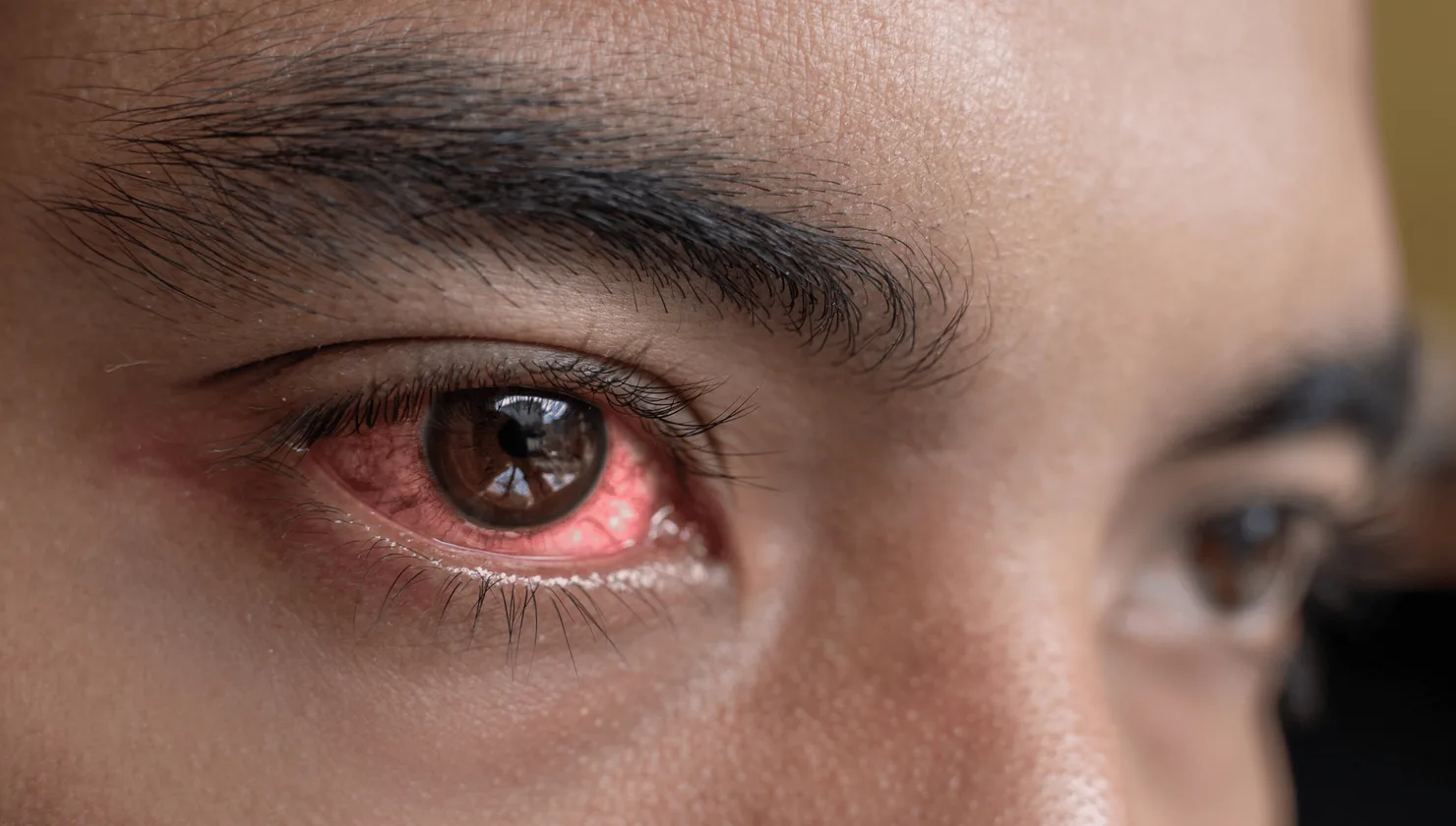
Symptoms
- Redness: The white of the eye or inner eyelid looks pink or red from irritated, dilated blood vessels.
- Discharge: Watery, yellow, green, or crusty discharge that may glue the eyelids shut, especially after sleep.
- Itching or burning: A gritty, scratchy, or burning feeling, common with allergic or viral conjunctivitis.
- Eyelid swelling: Puffy, swollen eyelids or a tender red lump on the lid, such as a stye.
- Excess tearing: Watering as the eye tries to flush out irritation or infection.
- Light sensitivity: Discomfort in bright light (photophobia), which can signal involvement of the cornea.
- Blurred vision: Cloudy or reduced vision, often from discharge but sometimes from a corneal infection.
- Foreign-body sensation: A persistent feeling that something is stuck in the eye.
When it's an emergency
Emergency care for eye infections
Call 911 immediately for life-threatening symptoms or if you cannot travel safely. Do not drive yourself or delay for online booking.
For other urgent symptoms, seek prompt emergency evaluation. Bellaire ER accepts walk-ins 24/7. For facility questions, call (713) 660-0001.
Come straight to Bellaire ER, open 24/7, for sudden or rapid vision loss or an eye injury or chemical splash. Call 911 immediately if eye symptoms come with a sudden severe headache, confusion, or one-sided weakness, which can signal a stroke rather than a simple infection.
Come to Bellaire ER right away for severe eye pain, marked light sensitivity, or a red eye with blurred or decreased vision. These can point to a corneal ulcer, a herpes eye infection, or an infection inside the eye that can permanently damage sight.
Contact-lens wearers should be evaluated urgently for any painful, red, or light-sensitive eye, because bacterial and other corneal infections can progress quickly and threaten vision.
Seek emergency care if the eyelid and surrounding skin become red, hot, swollen, and painful, if the eye bulges, or if eye movement becomes limited or painful, especially with fever. This may be orbital cellulitis, a serious infection behind the eye that needs IV antibiotics.
When it's not an emergency
Most cases of pink eye (viral or bacterial conjunctivitis), styes, and mild eyelid irritation are not emergencies. Vision stays normal, pain is mild, and the main symptoms are redness, itching, watering, or crusty discharge.
These cases are often well suited to Bellaire ER's virtual urgent care. A clinician can review your symptoms, identify the likely cause, and prescribe antibiotic drops or ointment when appropriate, or advise supportive care for viral pink eye, which usually clears on its own.
Helpful home measures while you arrange care include warm or cool compresses, gentle eyelid cleaning, avoiding contact lenses and eye makeup, and frequent handwashing, since many eye infections are contagious.
If mild symptoms worsen, pain increases, or your vision changes, move up to in-person or emergency evaluation.
What else could be causing this
- Viral conjunctivitis
- The most common cause of a red, watery eye, usually from the same viruses that cause colds. It typically starts in one eye and spreads to the other, with watery discharge, a gritty feeling and sometimes a tender gland in front of the ear. It is highly contagious for several days, antibiotics do nothing for it, and vision stays normal.
- Bacterial conjunctivitis
- Redness with thicker yellow or green discharge that glues the lashes together, often worse on waking. More common in children than adults. Vision is unaffected and the eye is irritated rather than genuinely painful. It responds to antibiotic drops and is distinguished from the viral form largely by the character of the discharge.
- Allergic eye inflammation
- Not an infection at all. Both eyes itch intensely, water, and the lids swell, usually alongside sneezing or a runny nose, and it comes and goes with pollen, dust or animals. Itching is the dominant symptom, which is the main clue, infections irritate and burn, allergies itch.
- Stye, chalazion and lid margin inflammation
- A blocked and infected gland at the lid margin produces a tender red lump; a blocked gland without infection leaves a firmer, painless lump that lingers for weeks. Chronic crusting and redness along the lash line is blepharitis. These are lid problems rather than eye problems, and warm compresses and lid hygiene do most of the work.
- Corneal abrasion or foreign body
- A scratch on the clear front surface of the eye, or something lodged on it or under the lid, from a fingernail, a branch, metal grinding, or a contact lens. Pain is sharp and constant, the eye waters heavily, blinking hurts, and light is uncomfortable. It feels like an infection but has a mechanical cause, and it is found with fluorescein dye in seconds.
- Corneal ulcer
- An infected crater in the cornea, and the reason a painful red eye in a contact lens wearer is treated urgently. Pain, marked light sensitivity, blurred vision and sometimes a visible white or gray spot on the cornea. It can scar the cornea and permanently reduce vision within days, and sleeping in lenses, topping up solution or rinsing lenses in tap water are the common routes to it.
- Herpes infection of the eye
- Herpes simplex or shingles affecting the eye. Pain, light sensitivity, watering and reduced vision, often in one eye only, sometimes with a blistering rash on the forehead, eyelid or nose tip in the shingles form. It needs antiviral treatment and specialist follow-up, and it is the reason steroid eye drops are never used without an examination. They can turn this infection into a sight-threatening one.
- Eyelid versus orbital infection
- Infection of the lid and surrounding skin alone is common, particularly in children, and is treated with antibiotics. Infection that has spread into the socket behind the eye is a different situation: the eye bulges, moving it hurts or is limited, vision may drop, and there is usually fever and marked illness. That pattern needs intravenous antibiotics in hospital and sometimes surgery, and it is the distinction every swollen, red eye is examined for.
- Serious red eye that is not an infection
- Acute angle-closure glaucoma, uveitis, infection inside the eyeball after surgery or injury, and a penetrating eye injury all produce a red, painful eye. Severe pain with a hard eye, haloes around lights, nausea and vomiting point to pressure. A red eye after any eye operation or injection is treated as an emergency. None of these improve with drops bought over the counter, and all of them are reasons a painful red eye with reduced vision is examined rather than treated blind.
What happens when you arrive
At Bellaire ER, a board-certified emergency physician examines your eye, checks your vision, and inspects the surface of the eye, often using fluorescein dye and a light to reveal scratches, ulcers, or corneal infection.
Depending on your symptoms, we can measure eye pressure, remove a foreign body, and start prescription antibiotic or antiviral treatment on site. On-site lab testing is available if a broader infection is a concern.
We diagnose and treat in a single visit, and most patients go home the same day with a clear treatment plan. If your condition needs an ophthalmologist or specialty care, we arrange urgent referral and explain exactly what to watch for.
Tests we can run on site
- Visual acuity measurement
- Reading a chart with each eye separately, which is the vital sign of the eye. It is the first thing measured and the single most important number in the evaluation: redness and discharge with normal vision is a different problem from redness with reduced vision, and the comparison with your other eye and your usual glasses sets the baseline for every check afterward.
- External and eyelid examination
- A physician looks at the lids, lashes and the skin around the eye, turns the lid to look underneath it for a trapped foreign body, and checks the gland in front of the ear. Swelling that stops at the lid behaves differently from swelling with a bulging eye, and this examination is what separates them.
- Pupil examination
- Pupil size, shape and reaction to light. An irregular or poorly reacting pupil, or one that is unusually small or fixed and mid-sized, points away from a surface infection and toward inflammation inside the eye, a pressure problem or a nerve problem, all of which are urgent.
- Fluorescein staining
- A drop of orange dye and a blue light make damage to the corneal surface glow. It reveals scratches, ulcers, the dendritic pattern of a herpes infection and the track left by a foreign body. This is the test that turns a painful red eye from a guess into a diagnosis, it takes under a minute, and it does not hurt.
- Eye pressure measurement
- The pressure inside the eye. A high reading supports acute angle-closure glaucoma, which is an emergency treated completely differently from an infection. Pressure is not measured when a penetrating injury is suspected, because the eye is not pressed on in that situation.
- Eye movement and position assessment
- Whether the eye moves fully in every direction, whether moving it hurts, whether it is pushed forward, and whether there is double vision. Painful or restricted movement with a swollen lid is the finding that distinguishes infection in the socket from infection of the lid, and it changes the plan immediately.
- CT scan of the orbit
- Cross-sectional imaging, available on site, used when infection may have spread behind the eye or into the sinuses, when there may be a retained foreign body, or after trauma. It shows an abscess in the socket and the extent of the infection, the information an ear, nose and throat or eye surgeon needs before deciding on an operation.
- Blood work and cultures
- Not needed for conjunctivitis. The on-site laboratory is used when infection is spreading or the person is systemically unwell, with a blood count and inflammatory markers, and a swab of discharge for culture when the infection is severe, recurrent, or occurring in a newborn.
Treated here, or transferred
Bellaire ER is a licensed freestanding emergency room, open 24 hours a day, 365 days a year, staffed by board-certified emergency physicians and nurse practitioners, with on-site CT, X-ray, ultrasound and laboratory, and medication given on site during your visit. It is equipped for emergency evaluation, stabilization and treatment, and it is not a hospital. There is no ophthalmologist on site, so part of what this visit does for a serious eye problem is work out how urgently you need one and get that arranged.
Most eye infections are treated here completely. Bacterial conjunctivitis and lid infections are treated with drops or ointment, with treatment started here and a prescription written for you to fill at your own pharmacy. Viral conjunctivitis is treated with an honest explanation, comfort measures and advice about how long you are contagious. A corneal abrasion is treated with pain control and antibiotic cover, and a foreign body on the surface of the eye can be removed and the eye examined afterward with dye. A chemical splash is irrigated immediately, before anything else and before any paperwork.
Suspected herpes infection of the eye and corneal ulcers are started on treatment here with urgent ophthalmology follow-up arranged, usually within a day, because these are the conditions where the difference between a good and a poor outcome is measured in days.
Some situations need a hospital. Infection that has spread into the socket behind the eye, infection inside the eyeball, acute angle-closure glaucoma, a penetrating injury or ruptured globe, and sudden vision loss requiring specialist intervention will be stabilized here: eye shielded where appropriate, antibiotics started, pain and nausea treated, imaging done, and transferred to the appropriate hospital or ophthalmology service. Transfer is a normal part of how a freestanding emergency room works, not a failure of the visit.
Children
Bellaire ER treats adults and children. In a newborn, any red eye or discharge in the first month of life is evaluated urgently rather than treated at home. Infections acquired around birth can involve the cornea and threaten sight quickly, and swelling, copious discharge or a red eye in a baby this age needs same-day in-person assessment. A blocked tear duct, which causes watering and crusting with a white of the eye that stays white, is common and far less concerning, but telling them apart is an examination, not a guess.
Conjunctivitis spreads rapidly through daycare and school, mainly on hands. Keep nails short, discourage rubbing, use separate towels, and ask about the school's return policy, which usually depends on treatment having started and discharge having settled.
Swelling and redness of the eyelid is common in children, often following a cold, a sinus infection, an insect bite or a stye, and much of it is lid infection that responds to antibiotics. The reason it gets looked at carefully is that children are the group in whom it spreads into the socket behind the eye. Bring a child in the same day, and go straight in for fever with a swollen eye, an eye that is bulging or that the child cannot open, pain or restriction on moving the eye, double vision, any change in vision, or a child who is becoming drowsy or unwell.
Chemical splashes and foreign bodies in children are emergencies handled the same way as in adults, starting with rinsing the eye with water for a prolonged period before traveling. Do not try to remove anything embedded in a child's eye, and do not let a child rub it, shield the eye loosely and come in. Finally, a child who holds one eye closed, avoids light, or stops using one eye is telling you something is wrong with the surface of that eye, and that is worth an examination even when nothing looks red.
After you leave
Use the drops or ointment exactly as often as you were told, including overnight if that was the instruction, and for the full course. Eye drops work for a short time each, which is why the frequency matters more than with most medications. Wash your hands before and after, do not let the bottle tip touch your eye or lashes, and leave several minutes between different drops if you were given more than one. Never use leftover drops from a previous problem or someone else's prescription, and do not use steroid drops unless a clinician examined your eye and prescribed them.
Keep contact lenses out until a clinician clears you, not until the eye feels better. Throw away the lenses and the case you were using when the infection started, along with any eye makeup from that period, and replace the solution. Wearing lenses through an infection is how a treatable surface problem becomes a corneal ulcer.
Viral conjunctivitis is contagious while the eye is red and watering, often for a week or more. Use your own towel and pillowcase, wash hands frequently, and avoid rubbing the eye, which both spreads it and makes it worse. Cool compresses and lubricating drops help; most cases settle over one to two weeks, sometimes getting slightly worse before they improve.
Come back the same day for pain that is getting worse rather than better, any drop in vision, a white or gray spot on the surface of the eye, worsening light sensitivity, lid swelling that is spreading, an eye that looks pushed forward, double vision or pain on moving the eye, or a fever alongside a swollen eye. A corneal abrasion should be noticeably better within a day or two: one that is not, or that becomes more painful, needs to be re-examined. Keep the ophthalmology appointment that was arranged for you even if the eye looks fine by the time it comes around.
What this visit costs
We accept most major insurance and bill your insurer directly. For emergency care, federal law caps what you pay at in-network rates and bars surprise bills, your deductible and copay still apply. Never delay emergency care over cost.
See how ER billing worksInsurance and coverage questionsRead the facility notice
Questions about a specific plan? Call (713) 660-0001. Only your plan can tell you how a claim will be processed.
Lowering your risk
Wash your hands often and avoid touching or rubbing your eyes, since many eye infections spread from the hands.
If you wear contact lenses, follow the recommended cleaning and replacement schedule, do not sleep in lenses unless they are prescribed for that use, and never rinse or store lenses in tap water.
Do not share towels, washcloths, eye makeup, or contact-lens cases, and replace eye makeup regularly. Remove makeup before sleep.
During an active infection, wash pillowcases and towels frequently, avoid close contact when advised, and discard any eye cosmetics used while you were infected.
Common questions
When should I go to the ER for an eye infection?
Go to the ER for sudden vision loss, severe eye pain, significant light sensitivity, a red eye with blurred vision, or any eye infection after an injury. Contact-lens wearers with a painful red eye should also be seen urgently. Most mild cases of pink eye or a stye do not need an in-person visit and can be handled through Bellaire ER's virtual urgent care.
Can pink eye be treated with telemedicine or urgent care?
Usually, yes. Most pink eye is mild and can be evaluated through Bellaire ER's virtual urgent care: viral conjunctivitis clears on its own, and bacterial conjunctivitis is treated with antibiotic drops. What should not be handled by video is a red eye with pain, light sensitivity or any change in vision, and that includes any eye infection in a contact-lens wearer, where a corneal ulcer can scar the eye permanently. Bellaire ER evaluates those in person 24/7 and arranges an ophthalmologist where the eye needs a specialist.
Are eye infections contagious?
Many are. Viral and bacterial conjunctivitis spread easily through hands, shared towels, and eye makeup. Wash your hands often, avoid touching your eyes, and do not share personal items until your symptoms have resolved.
Is an eye infection more dangerous for contact-lens wearers?
It can be. Contact-lens wearers are at higher risk for corneal infections such as bacterial keratitis, which can progress quickly and threaten vision. Stop wearing your lenses and seek prompt care for any painful, red, or light-sensitive eye.
Why prompt attention matters
Eye infections deserve prompt attention. Pain, light sensitivity, or any change in vision alongside redness or discharge separates a problem that needs urgent evaluation from ordinary irritation.
Get care at Bellaire ER
Walk in any time at 5302 Bellaire Blvd, Bellaire, TX 77401 (get directions) or call 713-660-0001. No appointment is required to be seen, though you can save your spot online if you prefer. A telehealth visit is available for mild, non-emergency concerns.
Sources & further reading
Medical information on this page is consistent with guidance from these trusted organizations:
People also ask
When should I go to the ER for eye infections?
Go to the ER for an eye infection if you have sudden vision loss, severe eye pain, marked light sensitivity, a red eye with blurred vision, an infection after an eye injury, or a painful red eye while wearing contacts. Mild pink eye or a stye can usually wait for Bellaire ER's virtual urgent care.
Read full answer →