
Abdominal Pain: Causes by Quadrant, Red Flags, and When to Go to the ER
Clinically reviewed by Mario Quintanilla, MD, Board-Certified Emergency Physician, on October 16, 2026.
Bellaire ER is a freestanding emergency room at 5302 Bellaire Blvd, open 24/7/365. Walk in or call ((713) 660-0001) anytime.
- Open now, 24/7/365
- Walk in, no appointment needed
- 5302 Bellaire Blvd, free parking
Go to the emergency room immediately for abdominal pain if the pain begins suddenly and severely, moves to your lower right abdomen, makes your stomach wall feel hard or rigid, worsens sharply when you hit bumps in the car, or occurs alongside a fever, relentless vomiting, fainting, blood in your stool or vomit, or pregnancy.
Abdominal pain is the single most common reason adults visit an emergency room in the United States, accounting for more than 8 million emergency visits every year. Yet it is also one of the most deceptive symptoms in medicine. Because the abdominal cavity houses the stomach, appendix, gallbladder, liver, pancreas, kidneys, intestines, major blood vessels (including the abdominal aorta), and reproductive organs, a dull ache that feels like indigestion at dinner can evolve into an acute surgical emergency (ICD-10-CM R10.0) by midnight.
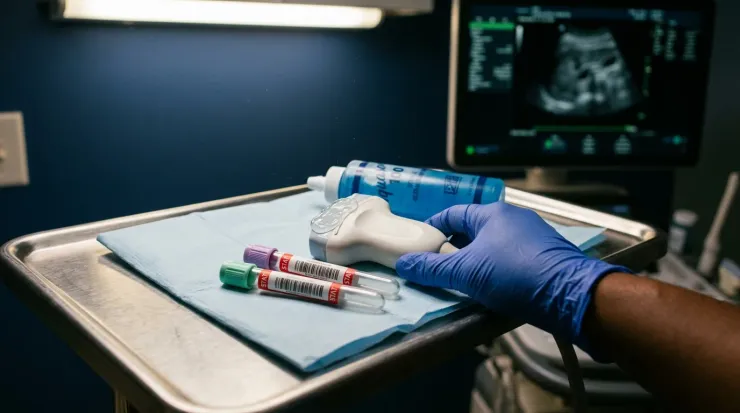
At Bellaire ER, located at 5302 Bellaire Blvd, our board-certified emergency physicians combine a focused physical examination with 24/7 on-site multi-slice CT imaging, diagnostic ultrasound, and STAT laboratory panels so you never have to guess whether your pain is a passing stomach virus or a condition that requires immediate intervention.
Mapping Abdominal Pain by Location: The 4-Quadrant Clinical Guide
Emergency physicians begin narrowing down acute abdominal pain (ICD-10-CM R10.9) by mapping where the pain is concentrated and how it behaves:
| Abdominal Region | How the Pain Typically Feels | Common Emergency & Urgent Causes | Key Diagnostic Tests at Bellaire ER |
|---|---|---|---|
| Right Upper Quadrant (RUQ) (Under the right ribcage) | Sharp, squeezing pain after eating fatty meals; often radiates to the right shoulder blade or upper back. | Acute cholecystitis (gallbladder inflammation / gallstones), biliary colic, hepatitis, duodenal ulcer, or right lower lobe pneumonia. | Right Upper Quadrant Ultrasound, liver function panel (AST, ALT, bilirubin, alkaline phosphatase), CBC, and lipase. |
Right Lower Quadrant (RLQ) (Lower right abdomen, ICD-10-CM R10.31) |
Starts near the belly button as a dull ache, then localizes to a sharp, constant pain in the lower right side; worse with coughing or walking. | Acute appendicitis (ICD-10-CM K35.80), right-sided kidney stone, ovarian torsion, ruptured ovarian cyst, or ectopic pregnancy. |
Abdominopelvic CT Scan, pelvic/transvaginal ultrasound, WBC count, C-reactive protein (CRP), urinalysis, and hCG test. |
| Epigastric & Upper Center (Below the breastbone) | Deep, boring pain radiating straight through to the mid-back; worse when lying flat and relieved slightly by leaning forward. | Acute pancreatitis (ICD-10-CM K85.90), perforated peptic ulcer, severe gastritis/heartburn, or inferior wall heart attack (MI). |
Serum Lipase, liver panel, 12-Lead EKG & Cardiac Troponin (to rule out cardiac ischemia masquerading as indigestion), and CT or ultrasound. |
| Left Lower Quadrant (LLQ) & Flank (Lower left side or back) | Steady cramping pain with fever and bowel changes, or sudden waves of excruciating flank-to-groin pain. | Acute diverticulitis (infected colon pouches), left-sided kidney stone (renal colic), colitis, incarcerated abdominal hernia, or left ovarian pathology. | Non-Contrast or Contrast CT Scan, urinalysis (checking for microscopic blood or infection), CBC, and basic metabolic panel. |
Why Hands-On Physical Exam Alone Is Not Enough (What the Research Shows)
If you have ever wondered why an urgent care clinic or primary care office often refers patients with significant stomach pain to an emergency room, peer-reviewed diagnostic research provides a clear answer: listening to bowel sounds and pressing on the abdomen cannot reliably rule out serious internal pathology without cross-sectional imaging and blood work.
1. Abdominopelvic CT Changes the Diagnosis in Nearly Half of ER Patients
In a landmark prospective study published in the American Journal of Roentgenology by Dr. Hani Abujudeh and colleagues at Massachusetts General Hospital (PMID: 21257870), researchers tracked 584 consecutive adult emergency department patients presenting with non-traumatic acute abdominal pain before and after CT imaging:
- Changed the Leading Diagnosis in 49% of Patients: Abdominopelvic CT changed the emergency physician’s primary pre-scan diagnosis in nearly half (
284 of 584) of all cases (p < 0.00001). - Boosted Diagnostic Certainty to 92.2%: Physician diagnostic confidence jumped from 70.5% before the CT scan to 92.2% after the scan.
- Altered the Treatment Plan in 42% of Cases: CT results directly changed the patient’s clinical management plan in 42% of visits, and safely spared 24.1% of patients who were initially slated for hospital admission from an unnecessary inpatient stay.
Similarly, the multicenter OPTIMA diagnostic accuracy study published in the BMJ by Dr. Wytze Laméris and colleagues across 1,021 acute abdominal pain patients (PMID: 19561056) proved that clinical exam and basic labs alone had a high rate of missed urgent diagnoses, whereas combining targeted ultrasound and CT imaging detected 89% to 94% of urgent surgical and medical conditions.
2. Recognizing Acute Appendicitis (ICD-10-CM K35.80) Before Rupture
Appendicitis is a classic race against time: once an obstructed appendix becomes inflamed and loses blood supply, perforation (rupture) and peritonitis can occur within 24 to 36 hours of symptom onset.
According to the JAMA Rational Clinical Examination systematic review by Dr. John Wagner and colleagues (PMID: 8918857), three specific physical and historical signs carry the strongest diagnostic weight (Positive Likelihood Ratio, LR+) for acute appendicitis:
- Right Lower Quadrant (RLQ) Pain (
LR+ = 7.31 to 8.46): Pain localized to McBurney’s point (one-third of the distance from the right hip bone to the belly button). - Abdominal Wall Rigidity or Involuntary Guarding (
LR+ = 3.76): Your abdominal muscles reflexively tighten when touched, or you feel a sharp jolt of pain when pressure is quickly released (rebound tenderness), or even when your car drives over a speed bump on Bellaire Blvd. - Classic Pain Migration (
LR+ = 3.18): Pain that starts as a vague, central ache around the navel and shifts down to the lower right quadrant over several hours, usually followed by loss of appetite (anorexia) and nausea.
3. Gallbladder Attacks and Why Bedside Ultrasound Is Essential
Right upper quadrant pain after a meal is frequently caused by a gallstone blocking the cystic duct (acute cholecystitis). In a JAMA meta-analysis of 17 clinical studies (PMID: 12503981), Dr. Robert Trowbridge and colleagues found that no single bedside physical finding or blood test can safely rule in or rule out acute cholecystitis on its own. While a positive Murphy’s sign (catching your breath sharply when a physician presses under your right ribcage during a deep inhale) increases the likelihood (LR+ = 2.8), confirming gallstones, gallbladder wall thickening, or bile duct dilation requires bedside right upper quadrant ultrasonography.
Special Warning: Why Abdominal Pain in Adults Over 65 Is High Risk
If a parent or spouse aged 65 or older develops new, unexplained abdominal pain, do not wait to see if antacids or rest help. According to clinical research by Dr. Caroline Lyon and Dr. Dwayne Clark in American Family Physician (PMID: 17111893):
- Up to 50% of older adults visiting the emergency room for acute abdominal pain require hospital admission.
- 30% to 40% require surgical intervention, and mortality rates for untreated abdominal emergencies in older adults are 6 to 8 times higher than in younger patients.
- Blunted Warning Signs: Up to 30% of older patients with a surgical emergency have a normal white blood cell count and no fever, and age-related thinning of the abdominal wall muscles often masks classic rebound tenderness even during perforated diverticulitis, bowel obstruction, mesenteric ischemia, or a leaking abdominal aortic aneurysm (AAA).
How Bellaire ER Evaluates and Relieves Abdominal Pain 24/7
Waiting in a crowded hospital triage lobby while doubled over with nausea and stomach cramps is miserable. At Bellaire ER, we move abdominal pain patients straight into a private examination suite so pain relief and diagnostic answers start together:
- Immediate Symptom Relief: Early administration of IV anti-nausea medication (such as ondansetron), IV fluids for dehydration from vomiting, and targeted IV analgesia. (Modern emergency medicine trials confirm that giving appropriate pain relief does not mask surgical findings when paired with on-site imaging.)
- On-Site Multi-Slice CT & Ultrasound: Our diagnostic imaging suite performs rapid abdominopelvic CT scans, pelvic/abdominal ultrasounds, and digital X-rays 24 hours a day.
- STAT On-Site Laboratory Panels: Our in-house lab runs CBC, comprehensive metabolic panels, liver enzymes, serum lipase, lactic acid, urinalysis, and pregnancy testing in minutes.
- Seamless Surgical Coordination: If your scan confirms acute appendicitis or cholecystitis requiring surgery, we initiate IV antibiotics at the bedside and coordinate direct inpatient transfer to a surgical team.
If you or a loved one is experiencing severe or worsening abdominal pain, walk into Bellaire ER 24/7 at 5302 Bellaire Blvd, Bellaire, TX 77401, or call (713) 660-0001 for immediate assistance.
Frequently asked questions
When should you go to the emergency room for abdominal pain?
Go to the emergency room immediately if abdominal pain starts suddenly and severely, migrates to the lower right side (a classic sign of appendicitis), makes your abdomen feel hard or rigid to the touch, hurts sharply when you release pressure or hit bumps in the road, or is accompanied by fever, persistent vomiting, blood in your stool or vomit, acute dizziness, or pregnancy.
How do I know if my stomach pain is appendicitis or just gas?
Gas pain typically moves around the abdomen, improves after passing gas or having a bowel movement, and does not cause a fever. Appendicitis (ICD-10-CM K35.80) classically begins as a dull ache around the belly button that migrates over 4 to 12 hours to a fixed, sharp pain in the right lower quadrant (RLQ), accompanied by loss of appetite, nausea, low-grade fever, and pain triggered by walking or pressing and releasing the lower right abdomen.
Can urgent care diagnose appendicitis or gallstones?
Most walk-in urgent care clinics do not have on-site abdominopelvic CT scanners, diagnostic ultrasound, or STAT surgical blood panels. Because clinical studies show physical exam alone misses up to half of urgent abdominal diagnoses, suspected appendicitis, gallbladder inflammation, kidney stones, or bowel obstruction should be evaluated at a 24/7 emergency room like Bellaire ER with on-site CT and ultrasound.
Why is abdominal pain in adults over 65 considered high risk?
Peer-reviewed emergency medicine research shows that up to 50% of adults aged 65 and older who visit the ER for acute abdominal pain require hospital admission, and 30% to 40% require surgery. Older adults often do not spike a high fever or elevated white blood cell count even when facing serious conditions like complicated diverticulitis, gallstone infection, bowel obstruction, or an abdominal aortic aneurysm.
What tests will Bellaire ER run for severe abdominal pain?
Depending on the location and character of your pain, our board-certified emergency physicians perform on-site blood tests (complete blood count, liver enzymes, lipase for pancreatitis, serum lactate, and pregnancy testing), urinalysis, bedside diagnostic ultrasound (ideal for gallstones and pelvic causes), and multi-slice abdominopelvic CT imaging, all during a single visit.
Clinical references & peer-reviewed sources
- Abujudeh HH et al. Abdominopelvic CT Increases Diagnostic Certainty and Guides Management Decisions: A Prospective Investigation of 584 Patients. AJR Am J Roentgenol. 2011;196(2):238-243. PMID: 21257870
- Laméris W et al. Imaging strategies for detection of urgent conditions in patients with acute abdominal pain: diagnostic accuracy study (OPTIMA). BMJ. 2009;338:b2431. PMID: 19561056
- Wagner JM, McKinney WP, Carpenter JL. Does this patient have appendicitis? (The Rational Clinical Examination). JAMA. 1996;276(19):1589-1594. PMID: 8918857
- Lyon C, Clark DC. Diagnosis of acute abdominal pain in older patients. Am Fam Physician. 2006;74(9):1537-1544. PMID: 17111893
- Trowbridge RL, Rutkowski NK, Shojania KG. Does this patient have acute cholecystitis? (The Rational Clinical Examination). JAMA. 2003;289(1):80-86. PMID: 12503981
Have Questions About Visiting Bellaire ER?
Call our team at (713) 660-0001 any time with questions about visiting our independent, physician-owned freestanding emergency room at 5302 Bellaire Blvd, open 24/7 with short waits.